What is an endodontist? An endodontist is a dentist who specializes in diagnosing tooth pain and performing root canal and other endodontic procedures. Endodontics is the branch of dentistry that focuses on the inside of the tooth, including the pulp and root canals. While general dentists provide routine dental care, endodontists treat more complex cases involving tooth pain, infection, and root canal treatment. In this article we will find out more details.
What Is an Endodontist?
An endodontist is a dentist who specializes in diagnosing and treating problems inside the tooth, especially in the dental pulp and root canals. Endodontists complete dental school and then receive 2–3 years of specialized training focused on diagnosing tooth pain and performing root canal therapy. Because of this training, they focus on saving natural teeth whenever possible.
What is an endodontic? Endodontics is the dental specialty focused on the tooth pulp, nerves, blood vessels, and the tissues surrounding the root, and root canals. In many cases, endodontic treatment such as root canal therapy is the most conservative way to save the tooth instead of removing it. Root canal therapy is often the most conservative way to save a damaged or infected tooth compared with extraction.
What Does an Endodontist Do?
If you want to know why see an endodontist, remember that they diagnose the cause of complex tooth pain and perform root canal procedures every day. They use advanced imaging and operating microscopes to clean, shape, and seal the canals, even in teeth with complex or unusual anatomy. Endodontic treatment may include root canal therapy, root canal retreatment, endodontic surgery, and treatment for cracked or dental trauma–related injuries.
Endodontist vs General Dentist in Vancouver
To check up, have cleaning, fillings, and cosmetic procedures, the most important oral healthcare provider is a general dentist. Simple root canal treatment can be carried out by a general dentist, but more complicated cases are referred to a root canal specialist, who has the best long term prognosis. Here are more details:
| Aspect | General Dentist | Endodontist (Root Canal Specialist) |
| Main role | Primary oral healthcare provider for checkups, cleanings, fillings, and cosmetic procedures | Specialist focused on diagnosing tooth pain and performing root canal and other endodontic procedures |
| Typical treatments | Checkups, dental cleanings, fillings, crowns, simple root canals, cosmetic and general dentistry services | Complex root canal treatments, retreatments, endodontic surgery, and management of complex tooth pain |
| Root canal cases | Can perform simple root canal treatment in straightforward cases | Handles more complicated root canal cases, including difficult anatomy and previously treated teeth |
| Training level | Dental school with broad training in all areas of general dentistry | Dental school plus an additional average of two or more years of specialized endodontic training |
| Case complexity | Focuses on routine and less complex procedures | Manages complex, high‑risk, or challenging root canal and tooth‑saving cases |
| Volume of root canals per day | Performs root canals occasionally as part of a wider range of treatments | Performs a large number of root canals per day, concentrating practice almost entirely on endodontic procedures |
| Predictability and success rates | Good outcomes in simple cases, may refer complex cases | Higher success rates and more predictable long‑term outcomes in complicated cases due to specialization and volume |
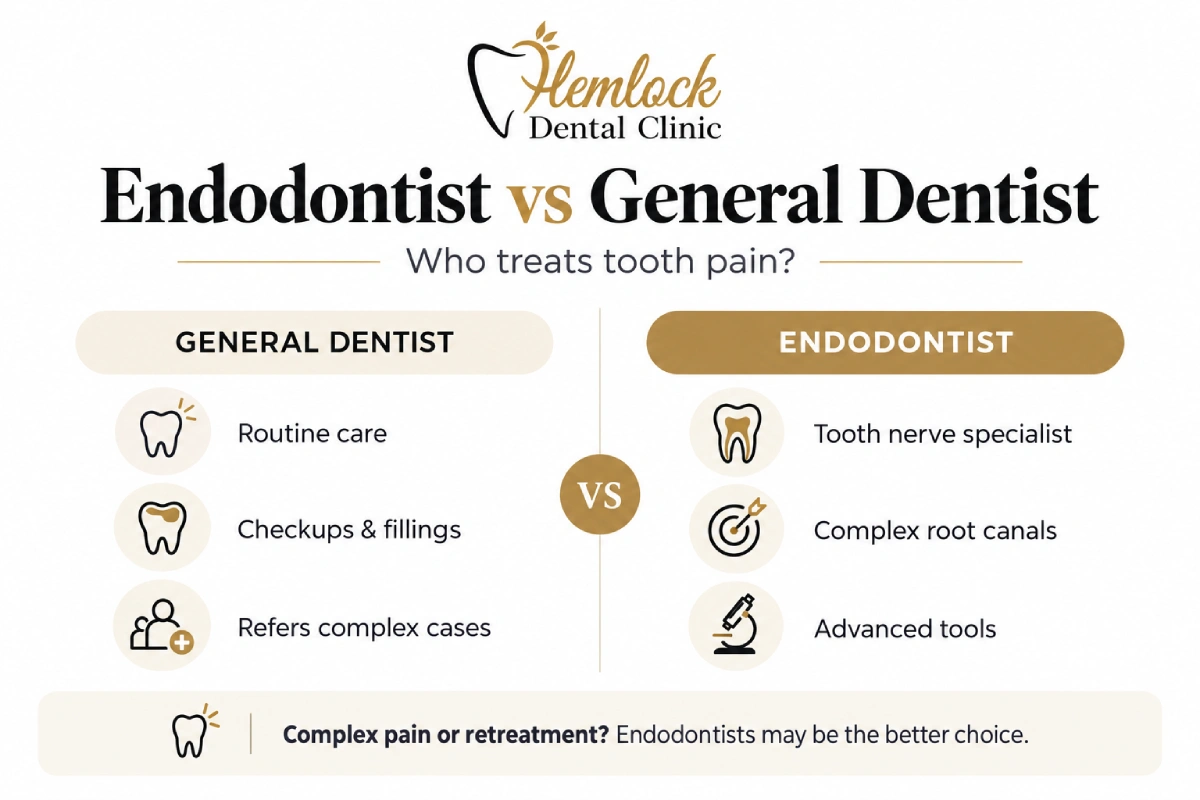
Endodontist vs General Dentist: Who Should Treat Your Tooth Pain?
If you want to know how to avoid root canal,you should know the differences between endodontists and dentists in application. They do not do the same thing and serve a different purpose in your treatment. General dentists handle routine care. Endodontists step in when the inside of the tooth is infected, inflamed, or structurally complex.
A study indicates that successful cases of complex root canals by endodontists are more successful, especially in molars and teeth that have already been treated. It is so because they have a high level of training, are exposed to the difficult anatomy very often, and they have some specialized tools that are used in the endodontic procedures.
Should a General Dentist Perform a Root Canal?
Very simple cases involving root canals can be safely performed by a general dentist, particularly in the front tooth or in a simple root single-rooted tooth. This may be convenient to the patients as they do not have to change dental clinics where they get their care.
However, in cases of widespread infection, the roots are complicated, the symptoms are chronic, or the prior root canal has failed, the patient is normally referred to an endodontist. Of such cases, the specialist in root canal has the expertise and equipment to handle challenging anatomy, find concealed canals, and provide the tooth with the most likely chance of a successful long-term outcome. Do you need help?
How Endodontists Help You Avoid Extraction
Most patients are concerned that a tooth that causes a great deal of pain must be extracted; however, endodontic treatment done by tooth-saving specialist can often prevent an extraction. Endodontists can eliminate the pain and seal the tooth by removing infected pulp tissue, disinfecting the canals, and restoring the tooth so that it functions for years.

When to See a Root Canal Specialist
If you are in Vancouver and experiencing:
- lingering tooth pain
- sensitivity to hot or cold
- discomfort when biting
An endodontist Vancouver can help determine whether the tooth can be saved with root canal therapy. Your general dentist may refer you to a root canal specialist when the case is complex or when advanced imaging and microsurgical techniques are required.
Aftercare: Antibiotics After Root Canal and Healing
Most modern root canal procedures do not require routine antibiotics because the infection is treated directly inside the tooth. Your provider may prescribe antibiotics after root canal treatment if there is significant swelling, systemic symptoms, or a high-risk medical condition. Good aftercare usually includes over-the-counter pain relief as recommended by your dentist, avoiding chewing on the treated tooth until it is restored, and returning for the final crown or filling to protect the tooth.

Dental Care in Vancouver, BC by Hemlock Dental Clinic
Patients searching for a dental clinic in Vancouver BC or dentist near Fairview / West Broadway often want both comprehensive general dentistry in Vancouver and access to advanced endodontic treatment when tooth pain strikes.
Endodontists work alongside general dentists to provide comprehensive care. Understanding their roles helps you know when each professional is right for your situation.At Hemlock, we are an emergency dentist in Vancouver that offer same-day pain relief, and close collaboration with a root canal specialist that is helpful if you develop a sudden toothache or swelling. Do you need help? Do not hesitate to contact us at Hemlock Dental Clinic Vancouver or fill out the form.
FAQs
What is a endodontist?
It is a dental pulp specialist with advanced training in diagnosing tooth pain and performing root canal therapy to save teeth.
What is an endodontic procedure?
It is any treatment focused on the inside of the tooth, most commonly a root canal procedure that cleans and seals the canals.
Who should do my root canal: endodontist vs general dentist?
Simple cases may be treated by a general dentist, but complex, painful, or previously treated teeth are usually best handled by an endodontist