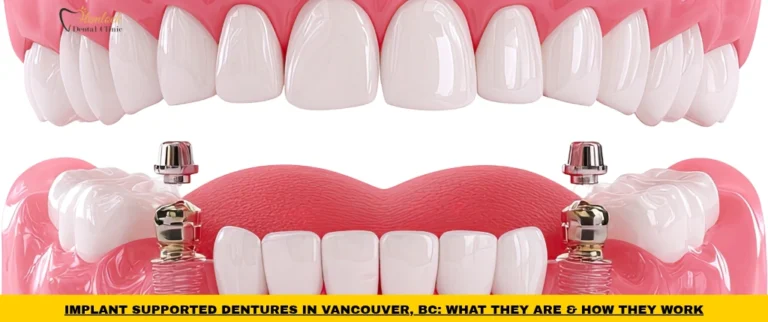
Implant supported dentures are a type of removable denture in dental treatment designed for people who want more stability than traditional dentures.
Traditional dentures sit directly on the gums, which means they can sometimes move while eating, laughing, or speaking. For some patients, this movement affects confidence and makes certain foods difficult to enjoy.
With implant-supported dentures, small titanium implants are placed into the jawbone. The denture then attaches to these implants using special connectors, helping it stay more secure during daily activities.
Patients who already wear dentures but are frustrated by looseness or discomfort often choose this treatment. It offers a balance between traditional dentures and fixed implant solutions.
In this guide, we explain how implant-supported dentures work, a dental implant cost guide, the different types available, and who may benefit from dental implants Vancouver.
Key Facts About Implant-Supported Dentures
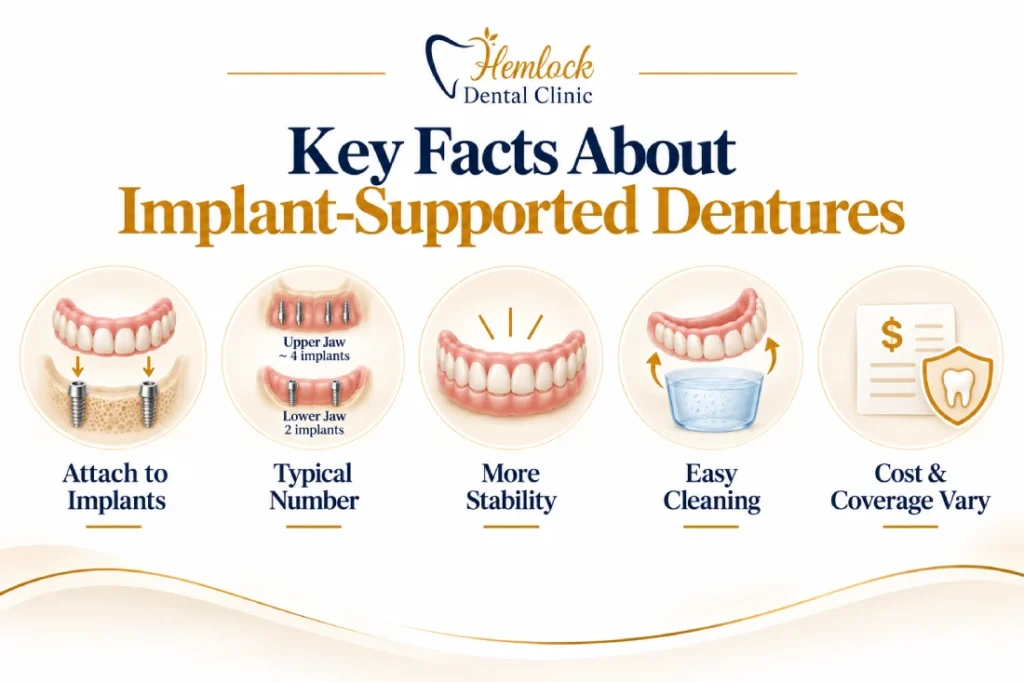
- Implant-supported dentures are removable dentures that attach securely to dental implants hub placed in the jaw.
- Most patients need 2 implants for the lower jaw and around 4 implants for the upper jaw.
- They provide more stability than traditional dentures while still allowing easy removal for cleaning.
- The total implant supported dentures cost depends on the number of implants, denture materials, attachment type, and additional treatments.
- The dental implants Vancouver portion may have coverage through some dental plans or programs, while implant placement is often covered differently.
Implant-Supported Dentures, Implant-Retained Dentures, and Snap-In Dentures: What Is the Difference?
Patients often hear several names for this treatment, which can make the options confusing, such as Implant-retained denture, per the implant-retained denture overview from ADA/MouthHealthy.
The terms below usually describe similar removable implant denture solutions:
| Term | Meaning |
|---|---|
| Implant-supported dentures | Removable dentures that receive support from dental implants |
| Implant-retained dentures | Dentures held in place using implant attachments |
| Overdentures | Removable dentures placed over implants or remaining teeth |
| Snap-in dentures | A common term because the denture clicks onto implant attachments |
McGill Consensus Statement on two-implant mandibular overdentures reported that although these dentures can be removed, they are designed to stay much more stable than traditional dentures.
Snap-In Dentures vs All-on-4: What Is the Difference?
Many patients compare snap-in dentures Vancouver options with fixed treatments such as All-on-4 treatment. Although both use dental implants, they work differently.
| Feature | Implant-Supported Dentures | All-on-4 |
|---|---|---|
| Removable | Yes | No |
| Cleaning | Easy to remove and clean | Requires cleaning around fixed teeth |
| Feeling | More stable than traditional dentures | Similar to fixed teeth |
| Cost | Usually lower | Usually higher |
| Best for | Patients who want stability with a removable option | Patients looking for a fixed full-arch solution |
Implant-supported vs retained dentures are not the same as All-on-4. If you are looking for a removable solution, implant-supported dentures may be the better comparison.
Implant-Supported Dentures vs Traditional Dentures
Traditional dentures remain a common option, but some patients experience problems with movement, sore spots, or difficulty chewing.
Implant-supported dentures improve stability by using implants as anchors.
| Traditional Dentures | Implant-Supported Dentures | |
|---|---|---|
| Stability | May move during daily activities | More secure attachment |
| Chewing comfort | Some foods may be difficult | Often improved confidence while eating |
| Bone support | Does not replace tooth roots | Implants help stimulate the jawbone |
| Cleaning | Removable | Removable |
| Initial cost | Lower | Higher |
For many patients, the biggest difference is confidence. They feel less worried about their dentures moving when they speak or eat.
Types of Implant-Supported Dentures
The type of attachment system depends on your oral condition, implant placement, and personal needs.
Locator (Snap-In) Dentures
Locator dentures are one of the most common types of implant retained dentures.
Small attachments connect the denture to the implants. The denture clicks into place and can be removed when needed for cleaning. It is supported vs retained
This option is popular because it combines improved stability with the convenience of a removable denture. Snap-in cost varies according to some factors, which can be determined by your dentist.
Bar-Retained Dentures
Bar-retained dentures use a custom bar connected to multiple implants. The denture attaches to this bar, creating additional support.
Your dentist will evaluate your jawbone, bite, and lifestyle before recommending the most suitable option.
How Many Implants Are Needed for Implant-Supported Dentures?
Knowing how many implants do we need depend on the number of implants depends on the jaw being treated and the amount of available bone.
| Jaw | Common Implant Number |
|---|---|
| Lower jaw | Usually 2 implants |
| Upper jaw | Usually 4 implants |
The lower jaw often requires fewer implants because the bone is usually stronger. The upper jaw generally needs additional support because bone structure differs.
A consultation and CBCT scan help determine the right treatment plan for each patient and also convert existing denture into new ones.
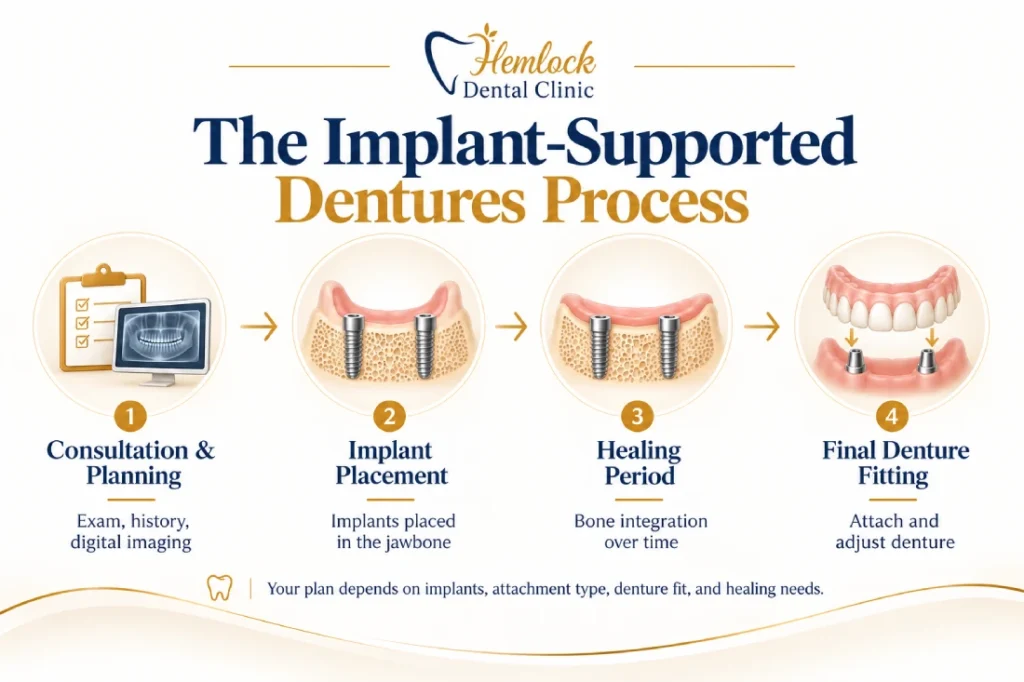
The Implant-Supported Dentures Process
The treatment usually involves several steps.
1. Consultation and Planning
Your dentist will examine your mouth, review your dental history, and use digital imaging to evaluate your jawbone.
During this appointment, your dentist will discuss:
- Number of implants needed
- Type of denture attachment
- Whether your current denture can be modified
- Whether additional procedures are required
2. Implant Placement
Dental implants are placed into the jawbone. In many cases, patients can continue wearing an adjusted denture during healing.
The implants need time to bond with the bone before the final attachment is placed.
3. Healing Period
Healing usually takes several months. During this time, the implants become securely integrated with the jawbone.
4. Final Denture Fitting
After healing, the attachment system is connected, and the denture is adjusted for comfort and proper function.
How Much Do Implant-Supported Dentures Cost in Vancouver?
The implant supported dentures cost in Vancouver varies from patient to patient. The final price depends on several factors, including:
- Number of implants required
- Upper or lower jaw treatment
- Type of attachment system
- Denture materials
- Additional procedures such as bone grafting
Because every case is different, a dental consultation is needed to provide an accurate estimate. CDCP/insurance plans can help cover certain denture related costs under your financial policy. Coverage for implants varies depending on the plan and eligibility requirements.
If you are considering this treatment, a consultation with Dr. Alavi can help you understand your options and expected investment.
Who Is a Good Candidate for Implant-Supported Dentures?
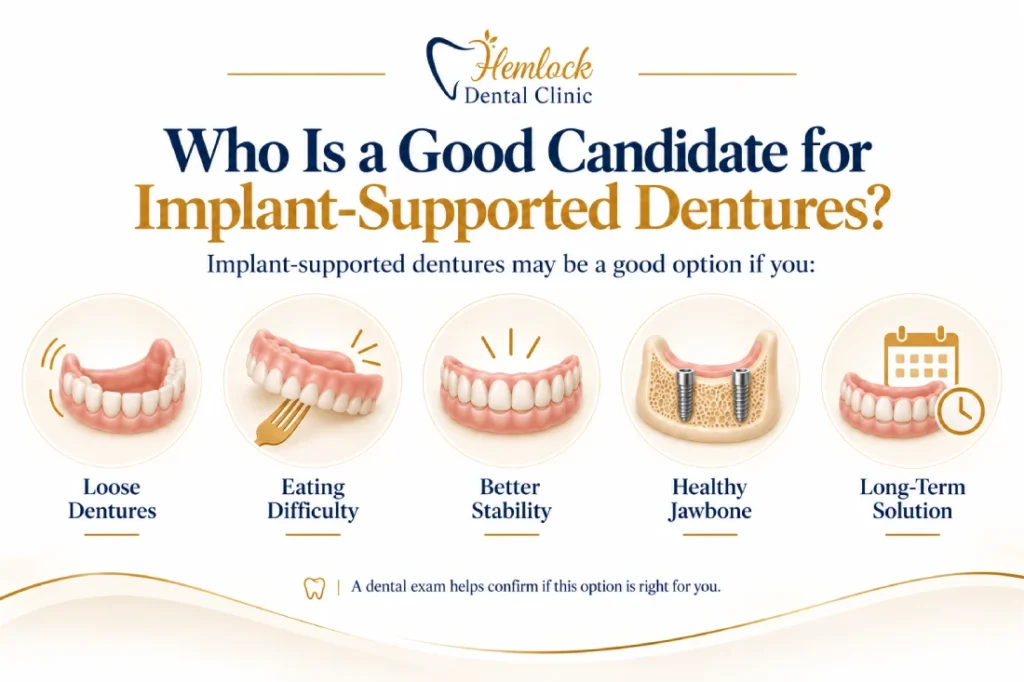
Implant-supported dentures may be a good option if you:
- Already wear dentures that feel loose
- Have difficulty eating because your denture moves
- Want better stability without a fixed restoration
- Have enough healthy jawbone to support implants
- Are looking for a long-term denture solution
Patients with bone loss may need additional evaluation. In some cases, bone grafting may be recommended before implant placement.
A dentist can determine whether implant-supported dentures are suitable based on your oral health and goals.
Patient Experience With Implant-Supported Dentures
Many patients choose implant-supported dentures because they want more confidence in everyday situations.
Common improvements patients report include:
- Feeling more comfortable speaking
- Less worry about dentures moving
- Better confidence during meals
- Easier daily denture use
Every patient has different needs, so your expected results should be discussed during your consultation.
Ask Dr. Alavi These Questions
- Can my current denture be attached to implants?
Sometimes an existing denture can be modified to work with implants. However, if the denture is old or no longer fits properly, a new denture may provide better results.
2. I only have problems with my lower denture. Do I need implants for both jaws?
Not always. Some patients choose implants only for the jaw where they experience the most problems.
3. How often do snap attachments need replacement?
Attachment parts naturally wear over time. Your dentist can check them during regular visits and replace them when needed.
4. If your dentures feel loose or affect your confidence while eating and speaking, implant-supported dentures may provide a more stable and comfortable option.
The best way to understand your choices is through a personalized consultation. Dr. Alavi can evaluate your oral health and explain whether snap-in dentures are suitable for your situation.
Find out if implant supported dentures are right for you; book a consultation with Dr. Alavi.
FAQs
How many implants are needed for implant-supported dentures?
Most lower dentures use two implants, while upper dentures often require four implants for better support.
Can I remove implant-supported dentures myself?
Yes. Implant-supported dentures are designed to be removed by the patient for cleaning.
How long do implant-supported dentures last?
With proper care & attachments and regular dental visits, implant-supported dentures can last many years. The denture and attachment components may need maintenance over time.
Do I need to remove my dentures at night?
Your dentist will provide personalized instructions based on your oral health and treatment design.
What is the difference between implant-supported and implant-retained dentures?
These terms are often used interchangeably and describe removable dentures stabilized by dental implants.
Does insurance or CDCP cover implant-supported dentures?
Coverage depends on your dental plan and eligibility. Some denture-related costs may qualify, while implant procedures often have separate coverage rules.