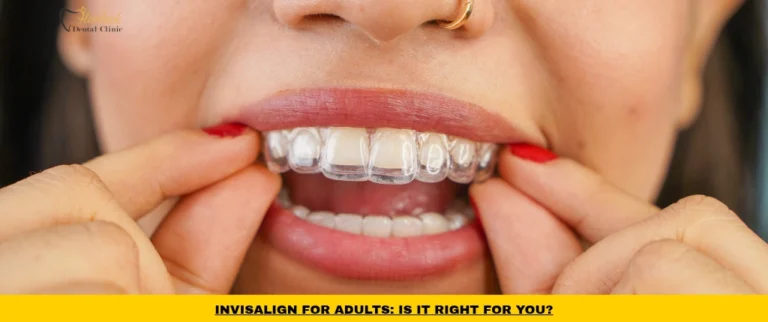
Adults can get Invisalign; there is no set upper age limit for clear aligner treatment. What matters most is the health of your teeth, gums, and supporting bone. Invisalign for adults can help with many cases of crowding, gaps, and some bite problems. It can also work if you have some crowns or dental implants, but these may change your treatment plan.
The best way to know if adult Invisalign treatment will work for you is to have your teeth, gums, bite, and dental history that is checked by a dentist. We will provide you with more details in this article.
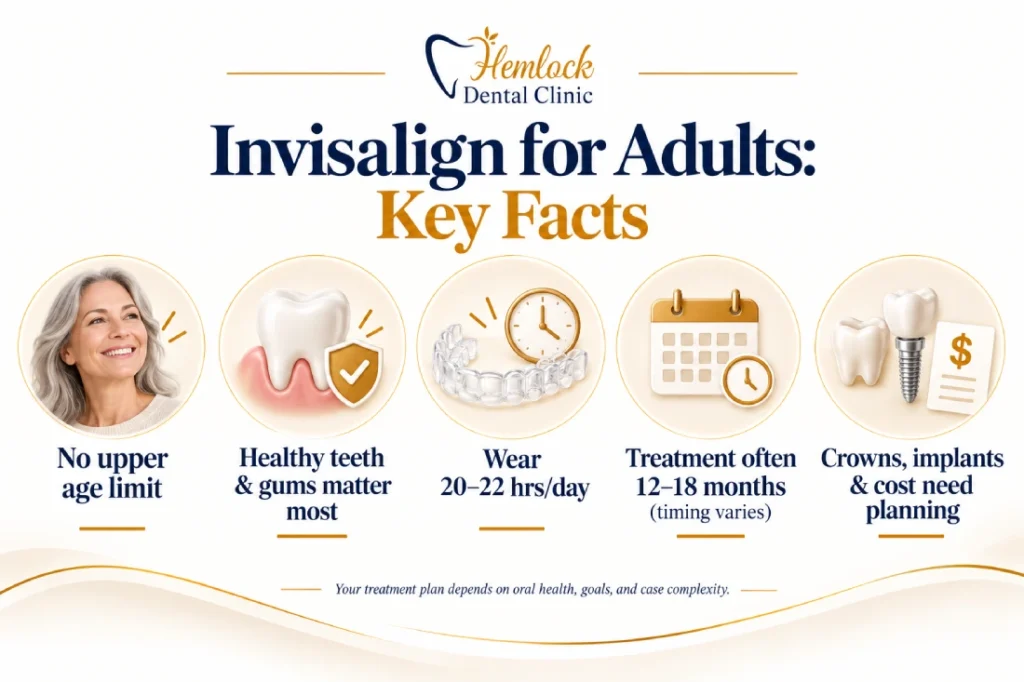
Invisalign for Adults: Key Facts
- There is no set upper age limit for Invisalign.
- Healthy teeth and gums matter more than your age.
- You usually need to wear your aligners for about 20–22 hours a day.
- Many treatments take around 12–18 months, but your timeline may be shorter or longer.
- Crowns do not always prevent Invisalign treatment.
- Dental implants cannot move like natural teeth, so your dentist needs to plan around them.
- Invisalign for adults cost depends on the complexity and length of treatment.
The American Association of Orthodontists notes that orthodontic treatment can work for adults as long as the teeth and supporting structures can handle treatment.
Is There an Age Limit for Invisalign?
No. There is no specific age when you become too old for Invisalign. Your dentist cares more about the health of your teeth, gums, roots, and supporting bone. Healthy adults in their 40s, 50s, and beyond can qualify for clear aligner treatment.
Before treatment, your dentist will check for problems such as active gum disease, tooth decay, and bone loss.
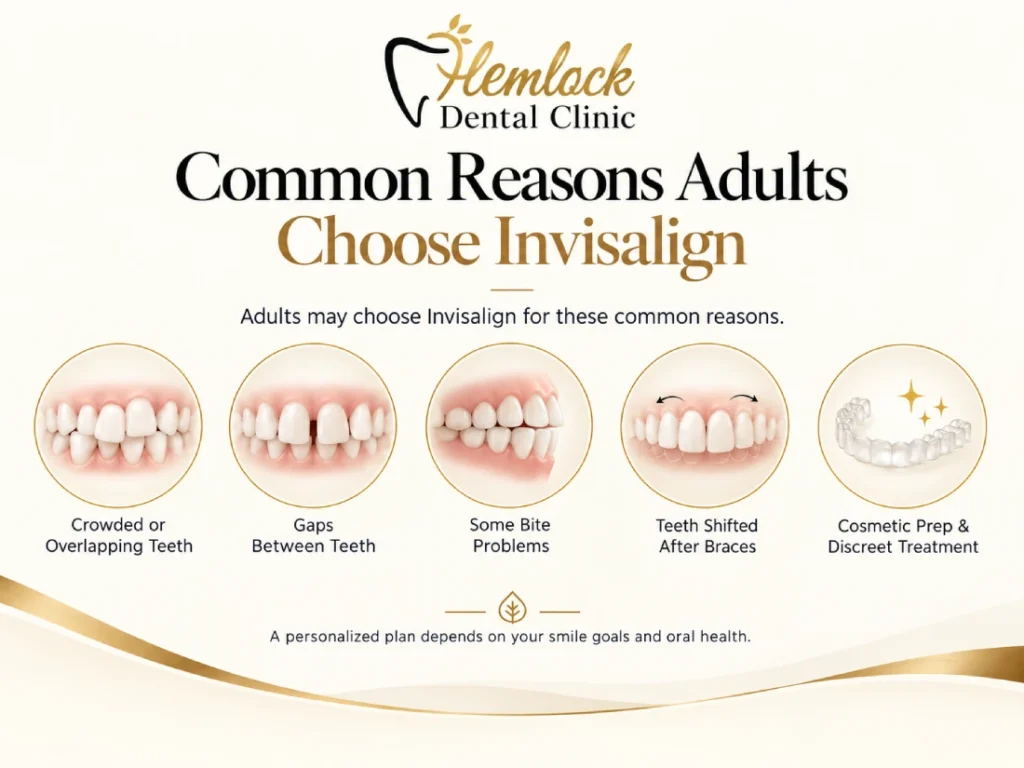
Common Reasons Adults Choose Invisalign
Many adults want straighter teeth but do not want traditional metal braces. Some had braces when they were younger, but their teeth moved again because they stopped wearing their retainers. Others never treated crowding or gaps in the first place.
Some adults also choose Invisalign for:
- Crowded or overlapping teeth.
- Gaps between teeth.
- Some bite problems.
- Teeth that shifted after braces.
- Improving tooth position before some cosmetic dental work.
- A less noticeable option for work and social situations.
Sometimes your dentist want to improve tooth position before other dental work. For example, creating or managing space can matter when planning dental implants or cosmetic treatment such as veneers.
Can Invisalign Fix Your Case?
Invisalign can treat many mild to moderate alignment problems. It can help with crowding, spacing, and some bite problems. But Invisalign is not the right choice for every case.
Complex tooth movements or certain bite problems may need a different orthodontic approach. Your dentist needs to examine your teeth and bite before deciding which treatment makes sense.
Learn more about Invisalign in Vancouver at Hemlock Dental Clinic and explore the available treatment options.
What If You Have Gum Disease?
Your gums need attention before you start moving teeth.
If you have active gum disease, your dentist may recommend treating and controlling it first. Healthy gums and supporting bone help provide a safer foundation for orthodontic treatment.
Can You Get Invisalign With Crowns?
Often, yes. A crown does not automatically stop you from getting Invisalign. Your dentist needs to check the crown, the tooth underneath it, and the movement your treatment requires.
Some cases also need small tooth-colored attachments to help the aligners move certain teeth.
Can You Get Invisalign With Dental Implants?
You can qualify for Invisalign if you have a dental implant. The important difference is that a dental implant does not move like a natural tooth. Your dentist needs to plan the movement of your natural teeth around the implant.
If you need an implant but have not received it yet, treatment order can become especially important. In some cases, your dental team may want to straighten the natural teeth before placing the implant.
Invisalign at Work and in Social Life
For many adults, this matters almost as much as straightening their teeth. Invisalign aligners are clear, but they still change some daily habits.
Can You Drink Coffee With Invisalign?
Remove your aligners before drinking coffee, tea, wine, soft drinks, or other beverages besides plain water.
Drinking colored or sugary drinks while wearing your aligners can stain them and leave liquid against your teeth.
If you drink coffee several times a day, Invisalign can still work, but you will need to build aligner removal and oral hygiene into your routine.
Will Invisalign Affect Your Speech?
You may notice a small change in your speech when you first start wearing aligners. Some people develop a slight lisp while their tongue gets used to them. This often improves as you adapt to wearing the aligners.
What About Restaurants and Dating?
You should remove your aligners to eat and also clean your teeth before putting them back in when possible.
For photos or social events, clear aligners are usually less noticeable than traditional braces. But you still need to wear them for the recommended number of hours each day for treatment to stay on track.
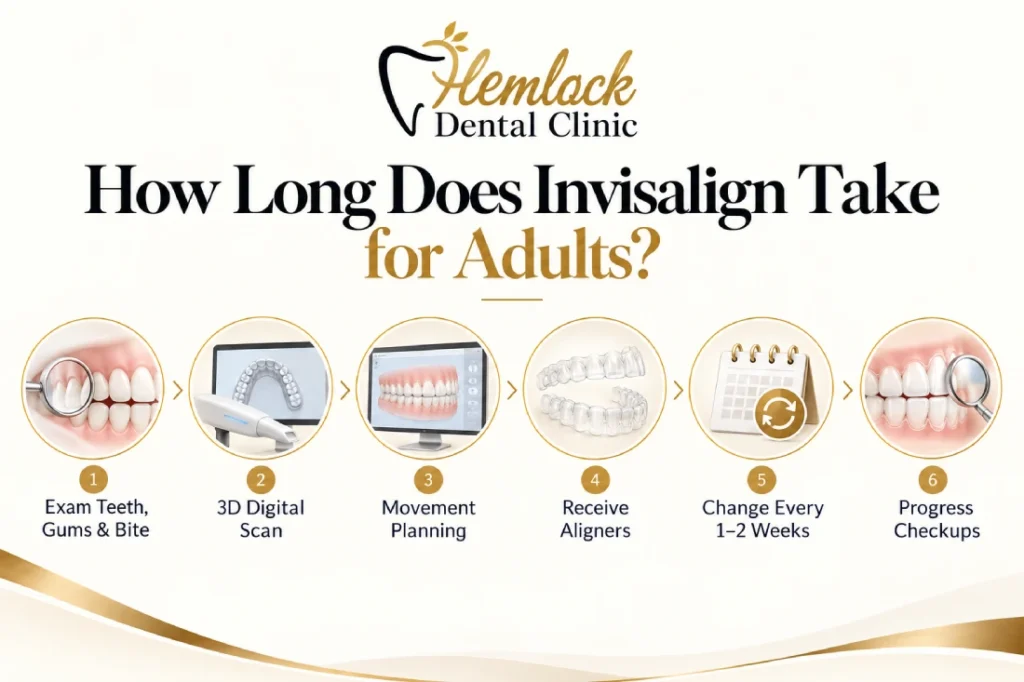
How Long Does Invisalign Take for Adults?
There is no single Invisalign timeline for every adult. Many treatments take around 12–18 months, but simple cases may take less time and complex cases can take longer. Your starting tooth position, bite, treatment goals, and aligner wear all affect the timeline.
Adult Invisalign treatment usually follows a process like this:
- Your dentist examines your teeth, gums, and bite.
- A digital scan creates a 3D model of your teeth.
- Your dentist plans how your teeth need to move.
- You receive a series of clear aligners.
- You change aligners based on your treatment plan, often every one to two weeks.
- Your dentist checks your progress during follow-up visits.
Wearing your aligners as directed plays an important role in keeping treatment on schedule.
How Much Does Invisalign for Adults Cost?
Invisalign for adults cost depends on the complexity of your case, the length of treatment, and how much tooth movement you need. Adults do not automatically pay more simply because of their age.
Some private dental insurance plans may cover part of orthodontic treatment, but coverage varies. Check your plan before treatment. For current local pricing and the factors that affect treatment cost, see Hemlock Dental Clinic’s guide to Invisalign cost in Vancouver.
Will Your Teeth Stay Straight After Invisalign?
If you do not wear your retainer as recommended after Invisalign treatment, your teeth can gradually shift out of position. This can happen at any age. That is why retainers are an important part of treatment.
Your dentist will tell you when and how long to wear your retainer after Invisalign. Following your retainer schedule helps protect the result you worked for. For additional patient information about adult orthodontic treatment, see the clear aligner therapy overview of the American Association of Orthodontists.
Ask Dr. Alavi
I had braces at 15 and my lower teeth crowded again. Do I need full Invisalign treatment?
Not always. It depends on how much your teeth have moved and whether your bite has changed. Some relapse cases need limited treatment, while others need a more complete plan. An exam and digital scan can show how much correction you need.
I have a crown and one implant. Can I still get Invisalign?
Possibly. Crowns do not automatically prevent Invisalign treatment. An implant cannot move like a natural tooth, so Dr. Alavi needs to plan your natural tooth movement around it.
I drink four coffees a day. Will Invisalign be a problem?
You can still drink coffee, but remove your aligners first. Frequent coffee drinkers should consider the time spent without aligners and clean their teeth before putting them back in.
Is Invisalign for Adults Right for You?
Invisalign can be a good option for adults who want to straighten their teeth without traditional braces. Your age, oral health, bite, previous dental work, and daily routine can all affect your treatment plan.
At Hemlock Dental Clinic in Vancouver, Dr. Farahnaz Alavi can check your teeth and gums and explain whether Invisalign fits your needs. If you are considering Invisalign for adults, you can book a consultation to learn about your treatment options, timeline, and expected cost. Book a consultation with Dr. Alavi.
FAQs
Can adults over 40 or 50 get Invisalign?
Yes. Being 40 or 50 does not automatically make you too old for Invisalign. What matters more is the health of your teeth, gums, and bone. Your dentist can check these before deciding if Invisalign is a good option for you.
How long does Invisalign take for adults vs teens?
It depends more on your teeth than your age. Many adults complete treatment in around 12–18 months, but some cases take less or more time. Your bite, tooth movement, and how well you follow your treatment plan can all affect the timeline.
Will my teeth shift back after Invisalign?
They can. Teeth can slowly move after Invisalign, which is why wearing a retainer is important. Your dentist will tell you how often to wear it to help keep your teeth in their new position.
Can I drink coffee with Invisalign?
Yes, but take your aligners out first. Coffee can stain your aligners, especially if you drink it often. Plain water is the best choice while your aligners are in.
Does Invisalign work if I have crowns or a dental implant?
It can. Having a crown or dental implant does not always rule out Invisalign. Crowns may need some extra planning, while dental implants stay in place and do not move like natural teeth. Your dentist will plan treatment around your existing dental work.
Is Invisalign Right for You?
It depends on more than your age. Your teeth, gums, bite, bone health, previous dental work, and daily habits all matter. A dental exam can help you understand if Invisalign is a good fit for your smile and lifestyle.