Invisalign can fix many overbite problems, especially mild to moderate cases caused by tooth position. Clear aligners move your teeth gradually to improve how your upper and lower teeth fit together. However, Invisalign alone can’t treat every overbite. The right treatment depends on your teeth, jaw position, and how severe the problem is.
If you’re thinking about Invisalign for an overbite, here’s what you need to know about treatment, results, and limitations.
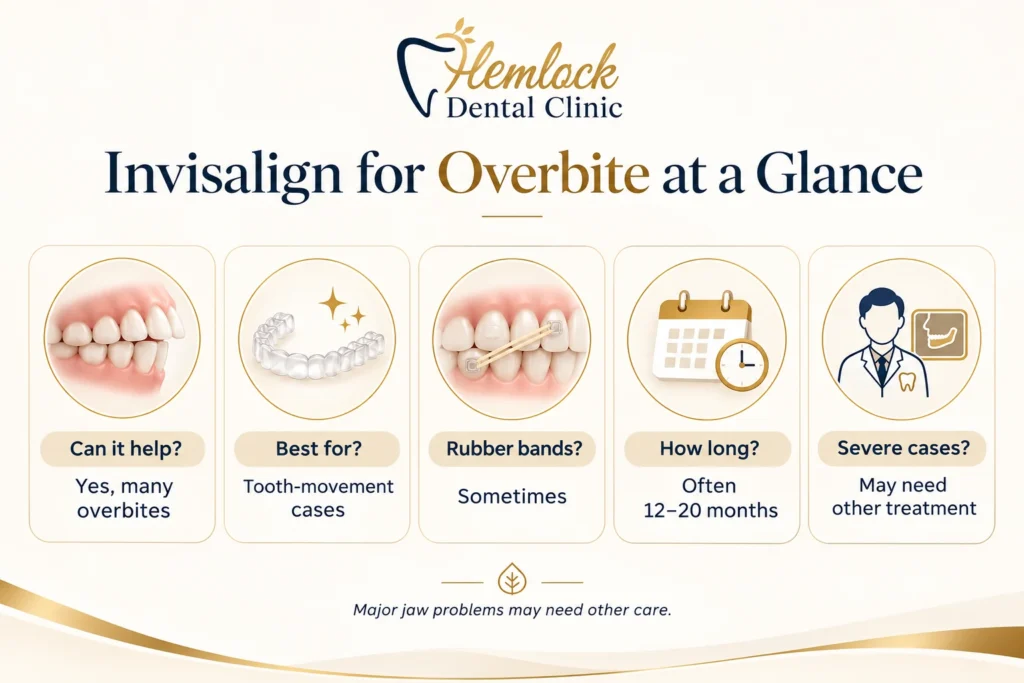
Invisalign for Overbite at a Glance
Answer these questions before choosing Invisalign for an overbite
- Can it fix an overbite? Yes, many dental overbites can improve with Invisalign.
- Who is a good candidate? People whose bite problems can be corrected by moving their teeth.
- Are rubber bands needed? Sometimes, depending on the bite.
- How long does it take? Often around 12–20 months for cases requiring bite correction, but treatment can be shorter or longer.
- Can it treat severe cases? Some, but major jaw problems may need other treatments.
Overbite vs. Overjet vs. Deep Bite: What’s the Difference?
An overbite is the vertical overlap between your upper and lower front teeth. Some overlap is normal. If your upper teeth cover too much of your lower teeth, you may have a deep bite. People often confuse orthodontic terms such as overjet vs overbite, but they are different problems.
| Bite Problem | What It Means |
| Overbite | Your upper front teeth overlap your lower teeth vertically. |
| Overjet | Your upper front teeth stick out horizontally beyond your lower teeth. |
| Deep bite | Your upper teeth cover too much of your lower front teeth. |
These differences matter because the same treatment doesn’t work for every bite alignment. A dental examination helps identify what needs correction.
What Causes an Overbite?
An excessive overbite can develop because of tooth position, jaw growth, or both. The cause helps determine which treatment will work.
Dental Overbite
A dental overbite happens when the position of your teeth creates too much vertical overlap. Your front teeth may have erupted too far or moved out of alignment.
In many cases, Invisalign can improve this problem by moving the teeth into better positions.
Skeletal Bite Problems
Skeletal bite problems involve the size or position of your jaws. For example, a lower jaw that sits too far back can cause a large overjet. Some patients also choose Invisalign for a deep bite.
These problems need a closer examination because moving teeth alone may not correct the jaw relationship.
How Does Invisalign Fix an Overbite?
Invisalign uses a series of clear aligners to move teeth gradually. Each aligner makes small changes based on your treatment plan.
For Invisalign bite correction, your dentist may use attachments, bite ramps, or rubber bands to help guide certain movements.
Invisalign Attachments
Invisalign attachments are small, tooth-coloured shapes placed on selected teeth. To fix an overbite with Invisalign, they help the aligners grip your teeth and control movement.
For example, attachments can help your dentist guide teeth that need more than a simple straightening movement.
Invisalign Elastics
Some people need Invisalign elastics, also called rubber bands, to help correct their bite. These bands connect the upper and lower aligners and apply extra force in specific directions. They are useful for certain bite problems, but not everyone needs them.
If your dentist recommends elastics, wearing them as instructed matters. Skipping them regularly can delay treatment or affect your results.
Bite Ramps
Bite ramps are small features built into certain Invisalign aligners. They help manage how the front teeth meet during treatment. Your dentist may use them for some deep bite treatments, along with other planned tooth movements.
Mandibular Advancement for Teens
Some growing teenagers with a lower jaw that sits too far back may benefit from Invisalign mandibular advancement features.
These features help guide the lower jaw forward during treatment. They are designed for selected growing patients and are not suitable for every teen.
Parents can learn more about Invisalign for teens when comparing orthodontic options.
How Long Does Invisalign Take to Fix an Overbite?
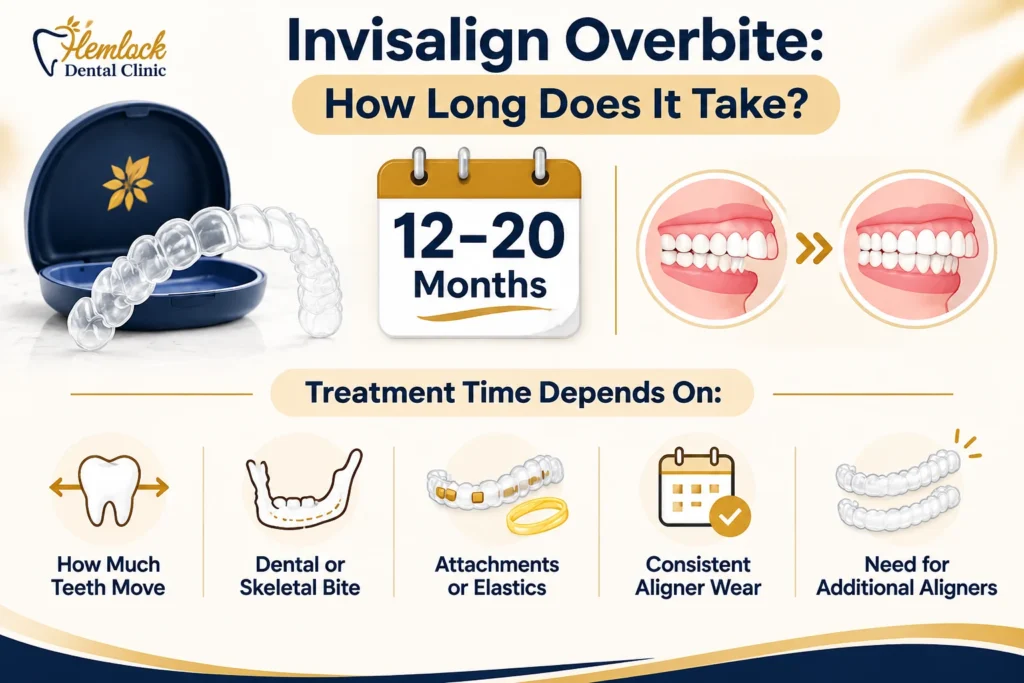
Invisalign overbite treatment can take around 12–20 months in some cases. But there is no single timeline for everyone. Mild problems need less time, while complex bite corrections can take longer. Treatment time depends on:
- How much your teeth need to move
- Whether your bite problem is dental or skeletal
- Whether you need attachments or elastics
- How consistently you wear your aligners
- Whether you need additional aligners during treatment
Correcting a bite can take longer than straightening a few crowded teeth because your dentist needs to improve how both rows of teeth fit together.
What Happens During Invisalign Treatment?
The process usually includes five steps:
- Dental examination and digital scan: Your dentist checks your teeth, bite, and jaw relationship.
- Treatment planning: A digital plan shows the movements needed to improve your bite.
- Aligners and attachments: You wear a series of aligners, usually for 20–22 hours a day.
- Progress checks and refinements: Your dentist monitors your bite and may order additional aligners if needed.
- Retainers: After treatment, retainers help keep your teeth in their new positions.
Your dentist will explain how often to change aligners and whether you need elastics.
What Do Invisalign Overbite Before and After Results Look Like?
Invisalign overbite before and after results can show changes in both tooth alignment and how the teeth meet.
After successful treatment, you may notice:
- Less overlap between your upper and lower front teeth
- Straighter front teeth
- Better contact between upper and lower teeth
- A more balanced smile
However, results depend on your original bite problem.
When comparing before-and-after photos, look at how the upper and lower teeth meet, not just how straight the front teeth appear. A good result should also support comfortable biting and chewing.
Your dentist can explain which changes are realistic for your teeth. Another patient’s results won’t necessarily match yours.
Can Invisalign Fix a Severe Overbite?
Yes, Invisalign can treat some severe overbites, but it isn’t the right choice for every case. If the problem involves tooth position, clear aligners still work with a detailed treatment plan.
However, major differences in jaw size or position may require braces, combined orthodontic treatment, jaw or orthognathic surgery.
When Another Treatment May Be Needed
Your dentist may recommend another option if you have:
- A major difference between your upper and lower jaw positions
- Complex tooth movements that need more control
- A severe bite problem involving both teeth and jaws
- A skeletal problem that cannot be corrected through tooth movement alone
This doesn’t mean Invisalign has failed. Different bite problems need different treatments.
If you’re unsure which option suits you, comparing braces vs Invisalign can help you understand the differences.
Why Is It Important to Correct an Overbite?
Not every overbite needs treatment. A small amount of overlap between your front teeth is normal.
An excessive overbite can sometimes cause problems such as:
- Uneven tooth wear
- Gum irritation from teeth making unwanted contact
- Difficulty biting comfortably
- Problems with how your upper and lower teeth fit together
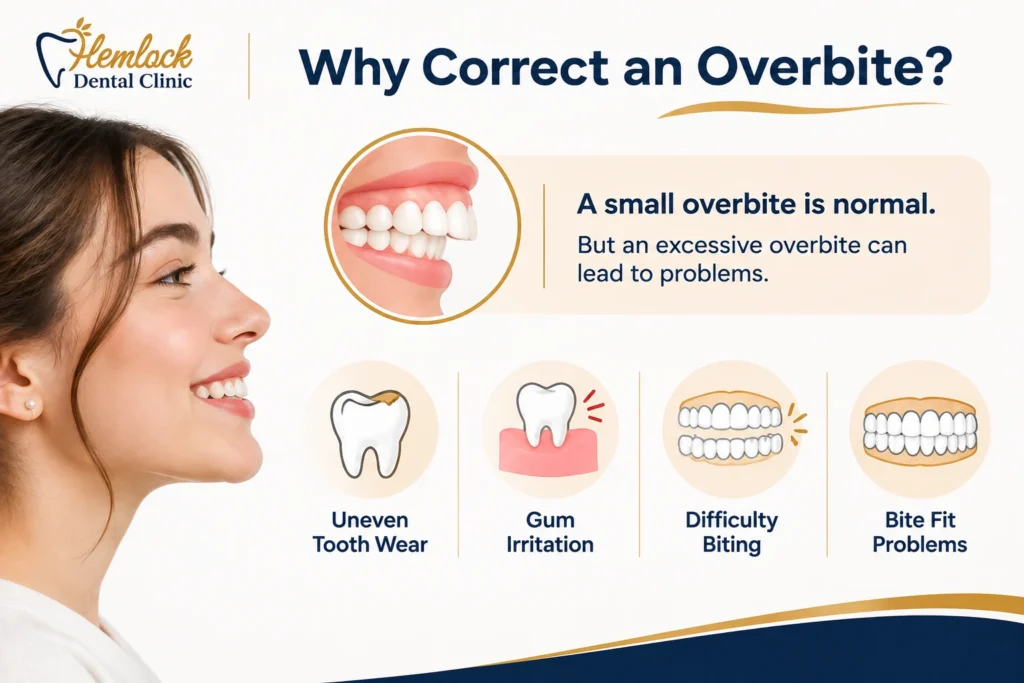
Treatment aims to improve your bite and protect your teeth, not just change your smile.
Your dentist can tell you whether your overbite needs correction or simply regular monitoring. Learn more about Invisalign treatment in Vancouver and explore whether clear aligners are suitable for your smile.
Is Invisalign Right for Your Overbite?
Invisalign is a good choice if your bite problem mainly involves tooth position and you can wear your aligners consistently. It is less suitable on its own if you have a major skeletal problem or need complex jaw correction.
Before choosing treatment, your dentist needs to check three things:
- Your teeth: How much movement is needed?
- Your jaws: Is the problem dental, skeletal, or both?
- Your treatment needs: Can clear aligners achieve the planned correction?
Cost also matters when choosing orthodontic treatment. The price depends on your case, treatment length, and the services included.
You can read more about Invisalign cost in Vancouver to understand what may affect your treatment cost.
Ask Dr. Alavi About Invisalign Overbite Treatment
If you’re unsure what type of overbite you have, Dr. Alavi can examine your teeth and explain your options. During your consultation, you can discuss whether your problem is dental or skeletal, whether you need elastics, and what results you can expect.
You can also ask what happens if you don’t wear your aligners or elastics as instructed. The goal is to choose a treatment that makes sense for your bite rather than assuming Invisalign works for every case.
Invisalign Overbite Treatment at Hemlock Dental
Invisalign can improve many overbite problems, but the first step for orthodontic bite problems is finding out what causes yours. Some patients only need tooth movement, while others need a different orthodontic approach. At Hemlock Dental, Dr. Alavi can assess your bite, explain your treatment options, and help you decide what comes next.
FAQs
Can Invisalign fix a deep bite?
Yes. Invisalign can correct many deep bites by moving the teeth into better positions, although some complex cases need other treatments.
How long does Invisalign take to fix an overbite?
Some cases take around 12–20 months, but the timeline depends on your bite, treatment plan, and how consistently you wear your aligners.
Does Invisalign use rubber bands for overbite correction?
Yes. Some patients need rubber bands to help improve their bite, but not every treatment requires them.
What’s the difference between overbite and overjet?
Overbite describes vertical overlap between front teeth, while overjet describes how far the upper front teeth extend forward.
Can Invisalign fix a severe overbite without surgery?
Some severe overbites can improve without surgery. However, major skeletal problems may need a surgical assessment.
Is Invisalign better than braces for an overbite?
Neither treatment is best for everyone. The right choice depends on your teeth, jaw position, and the correction you need.