Tooth decay and toothaches can sometimes cause headaches, because the nerves inside the teeth are closely connected to the nerves of the face, jaw, and head. Many emergency dentist Vancouver reported that headaches can be caused by tooth decay.
This is a proven and evident relationship in dentistry. After many patients find out that their toothache leads to a headache, they are usually surprised. This occurs more frequently in clinical practice than may be believed.
How Tooth Decay Leads to Headaches?
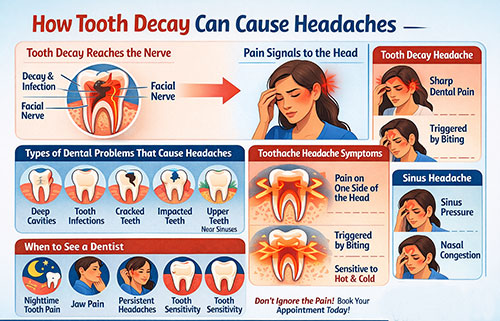
Tooth decay begins on the enamel. As it progresses deeper, it can reach the pulp, where the tooth’s nerve is located. Once the nerve becomes inflamed, the pain can spread through facial nerve branches to the jaw, temples, or sides of the head. Many patients describe this as a “tooth headache” because the sensation isn’t always felt directly in the tooth.
In clinical cases, this type of pain is usually dull, constant, and difficult to pinpoint. Patients often confuse it with stress or migraine, especially when the dental source is hidden or the decay is still small.
Clinical experience has shown that the patient usually reports that the headache is dull, persistent, and hard to find, and they just need a tooth extraction Vancouver. In some cases, instead of realizing that the cause of it is dental, they can consider it to be stress or migraine.
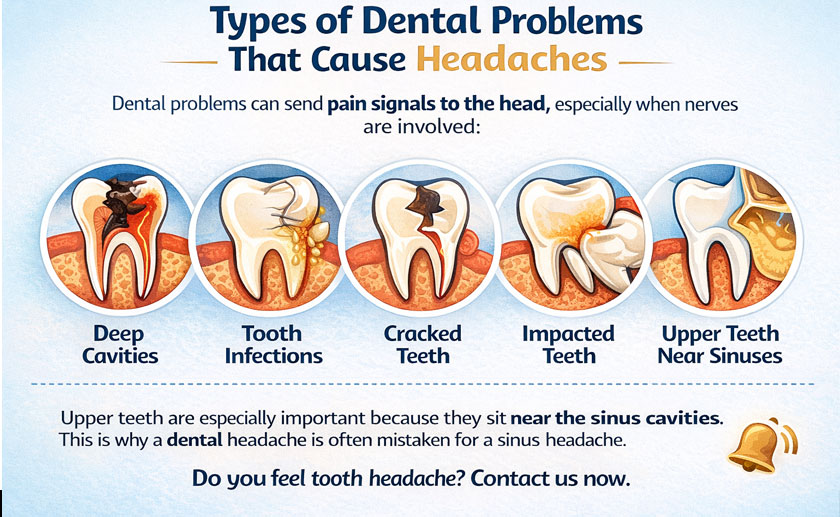
Types of Dental Problems That Cause Headaches
Several dental problems can trigger headaches because they affect the nerves of the teeth and surrounding structures, especially when inflammation or infection is present:
- Deep cavities that reach the tooth nerve
- Tooth infections or abscesses
- Cracked or fractured teeth
- Impacted or poorly positioned teeth
- Upper tooth problems close to the sinuses
Upper teeth are especially important because they sit near the sinus cavities. This is why a dental headache is often mistaken for a sinus headache.
What Types of Headaches Are Associated with Tooth Decay?
Headaches caused by tooth decay often feel different from regular headaches:
- Pain on one side of the head
- Pressure behind the eyes or in the temples
- Pain that gets worse when chewing
- Sensitivity to hot or cold foods
- Headaches that improve after dental treatment
Once the tooth problem is treated by tooth filling Vancouver, these headaches usually fade quickly.
Can Tooth Decay Cause Headaches Even Without Tooth Pain?
Sometimes decay develops slowly and does not cause sharp tooth pain at first. The nerve may already be irritated while the tooth still feels normal. In these cases, recurring headaches can be the only noticeable symptom. Hidden cavities between teeth or underneath old fillings are a common clinical cause of unexplained head pain.
Tooth Decay versus Sinus Headache: How to Distinguish
Dental headaches and sinus headaches can feel similar, especially when upper teeth are involved. Dental pain often changes when chewing or biting and may come with temperature sensitivity. Sinus-related pain usually includes congestion, facial pressure, and worsening discomfort when bending forward. A proper dental checkup examines both the teeth and sinus areas to identify the actual source of the pain.
Tooth Decay Headache vs Sinus Headache
| Feature | Tooth Decay Headache | Sinus Headache |
|---|---|---|
| Triggered by chewing | Yes | No |
| Sensitivity to hot/cold | Yes | No |
| Nasal congestion | No | Yes |
| Pain when bending forward | Sometimes | Yes |
| Requires dental treatment | Yes | No |
Headaches and Toothaches Every Night
Nighttime toothache is a strong sign that the decay is close to the nerve. Many people say, “My tooth hurts at night but not during the day.” When you lie down, blood flow to the head increases, which puts more pressure on an inflamed tooth nerve. This often leads to night headaches and difficulty sleeping. Persistent nighttime tooth pain usually means the decay has reached the nerve or an infection is developing.
When Migraines Could Be a Toothache
Some headaches that feel like migraines may actually come from dental nerve irritation. If the pain is accompanied by tooth sensitivity, jaw discomfort, or nighttime worsening, the dental cause should be considered, especially if painkillers are not effective. A dental examination can rule out hidden decay, nerve inflammation, or early infection.
Have a Checkup at Hemlock Dental Clinic
If you experience persistent headaches along with tooth sensitivity, jaw discomfort, or nighttime toothache, it may be related to a dental issue. Identifying and treating the source early can prevent the pain from worsening.
At Hemlock Dental Clinic in Vancouver, we see many patients who never thought their headaches were connected to their teeth. Our approach in general dentistry focuses on finding the real cause, not just treating symptoms. Whether you need a tooth filling in Vancouver, urgent care from an emergency dentist, or advice about tooth extraction, our team is here to help. If you are dealing with headaches, nighttime tooth pain, or unexplained facial pressure, don’t wait.
Book an appointment with Hemlock Dental Clinic today and stop the pain at its source.
FAQs
How to Tell If a Headache Is From a Tooth؟
A headache caused by a tooth problem may come with tooth pain or sensitivity to hot and cold. The pain may get worse when you chew or lie down. However, headaches can have many causes, so a dentist can check whether a tooth problem is responsible.
Can tooth decay cause headaches?
Yes, tooth decay can irritate dental nerves and cause pain that spreads to the head.
Can a toothache give you a headache?
Yes, an untreated toothache can lead to headaches through shared facial nerves.
Can tooth decay cause headaches without tooth pain?
Yes, hidden or slow-growing decay may cause headaches before tooth pain appears.
Why does my tooth hurt at night and cause headaches?
Lying down increases blood pressure in the head, making nerve pain stronger at night.
When should I see a dentist for headaches?
If headaches come with tooth sensitivity, jaw pain, or nighttime discomfort, contact us or fill out the form on this page to reserve a checkup time.