If you feel like no whitening toothpaste or strip touches those stubborn stains, you are not alone. Many Vancouver patients come to Hemlock Dental Clinic in Vancouver because the color of their teeth bothers them, even though they brush, floss, and see a hygienist regularly. Professional, dentist-led teeth bleaching is designed exactly for this situation: deeper, more resistant stains that need more than a basic whitening kit.
At Hemlock Dental Clinic, we look at your overall oral health. If you are a better candidate for Vancouver teeth bleaching, we will explain why and help you.
What Is Teeth Bleaching?
Teeth bleaching is a cosmetic dental treatment that uses peroxide-based gels to safely lighten the shade of your natural teeth. Instead of just scrubbing surface stains, the gel works inside the enamel and dentin to break down the pigments that make teeth look yellow, brown, or dull. That is why professional bleaching can help in cases where regular whitening toothpaste, mouthwash, or strips have reached their limit.
People often use “whitening” and “bleaching” as if they mean exactly the same thing. In everyday conversation, that is fine. Clinically, teeth whitening can describe any method that makes teeth look cleaner and brighter, while Vancouver teeth bleaching usually refers to stronger peroxide treatments that can change the internal color of the tooth.
Bleaching vs. Regular Whitening, Which Do You Need?
Not everyone needs full-strength bleaching when choosing cosmetic dentistry in Vancouver. Some patients get great results from gentler whitening methods in a teeth Whitening clinic in Vancouver, especially if their stains are mostly on the surface. The type of stains you have and your sensitivity level before we recommend anything.
- Surface (extrinsic) stains come from coffee, tea, red wine, coloured foods, and tobacco. Professional cleanings and milder whitening products often help a lot.
- Deep (intrinsic) stains are built into the tooth structure. They may be related to aging, fluorosis, trauma, or certain medications such as tetracycline. These stains are harder to shift and are usually the reason people consider professional teeth bleaching in Vancouver.
Bleaching is better for you if:
- Your teeth look dark, grey, or yellow even after a recent cleaning
- You have had “OK” results with whitening strips or pastes but want a bigger, more even change
- You have older, banded or mottled stains that have been there for years
During your consultation for Cosmetic Dentistry in Vancouver, we will check your teeth, gums, and any existing crowns or fillings. We also measure your starting shade and show you realistic possibilities, so you understand what bleaching can and cannot do for your smile.
Who Is a Good Candidate for Teeth Bleaching in Vancouver?
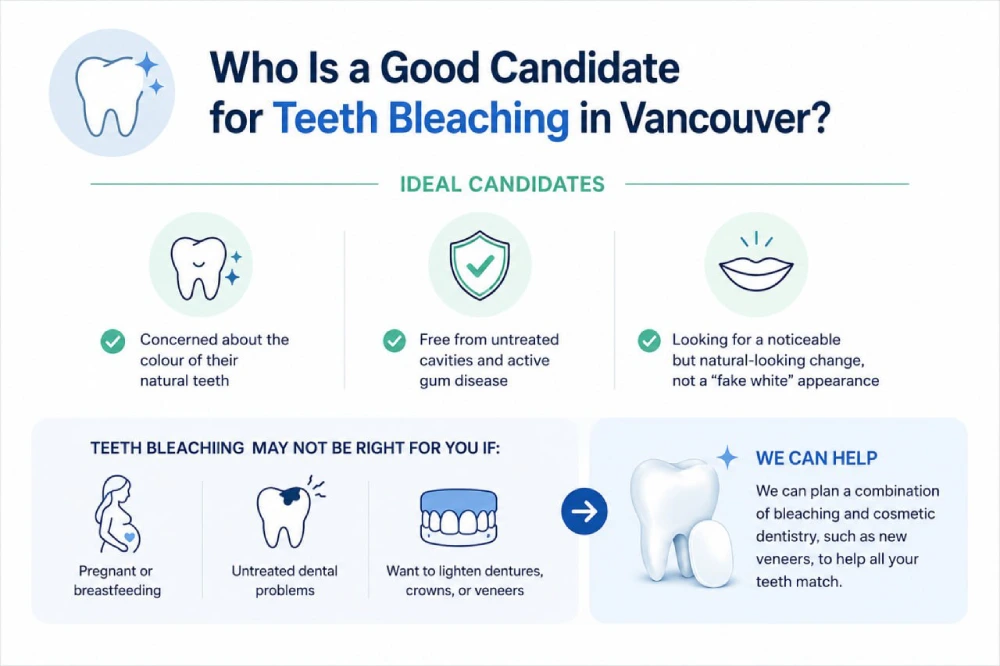
Most healthy adults with natural teeth can be considered for teeth bleaching. They have natural teeth and healthy mouth. Ideal candidates are:
- Concerned about the colour of their natural teeth
- Free from untreated cavities and active gum disease
- Looking for a noticeable but natural-looking change, not a “fake white” appearance
We may suggest postponing Vancouver teeth bleaching if you are pregnant or breastfeeding, or if you have untreated dental problems. Bleaching is also not the right choice if you want to lighten dentures, crowns, or veneers, because those materials do not respond to whitening gel. In that case, we can plan a combination of bleaching and cosmetic dentistry, such as new veneers, to help all your teeth match.
Professional Bleaching Options at Hemlock Dental
At Hemlock Dental, our goal is to offer options that match real life: different stain patterns, different schedules, and different comfort levels. All of our bleaching treatments include dentist supervision.
| Option | Best for | Speed of results | Supervision level | Flexibility |
|---|---|---|---|---|
| In-office bleaching | Fast change before an event | Fastest | Highest | Single-visit focus |
| Take-home custom trays | Gradual whitening at your own pace | Moderate | Ongoing check-ins | Very flexible |
| Combination deep bleaching | More resistant, long-standing stains | Fast + ongoing | Highest | Tailored plan |
In-Office Bleaching
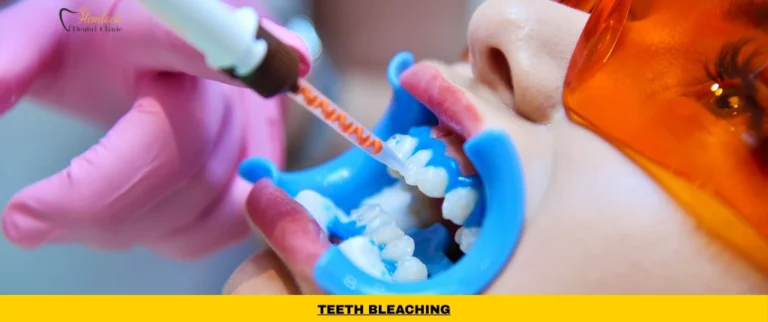
In-office bleaching is ideal if you want results quickly, for example before a wedding, graduation, or important work event. After protecting your gums and soft tissue, we place a concentrated peroxide gel on your teeth. Depending on the system, we may use a special light or laser to activate the gel. Treatment usually takes about 60–90 minutes, and most patients see a visible change in shade by the end of the appointment.
Take-Home Custom Tray Bleaching
Take-home bleaching uses custom-made trays that fit closely over your teeth. You wear them with a dentist-prescribed gel for a set time each day at home, usually over one to two weeks. Because the trays are made from impressions of your teeth, the gel is spread evenly and kept away from your gums as much as possible. This option suits patients who prefer a more gradual change or want an easy way to top up results later.
Combination “Deep Bleaching”
Some stains, especially long-standing intrinsic stains, respond best to a combination plan. This might mean one in-office session to start the whitening, followed by a period of take-home tray use to stabilise and build on the result. We sometimes call this a deep bleaching protocol. It is often the most effective choice for people who have tried multiple whitening methods without being fully satisfied.
What Happens During a Bleaching Appointment?
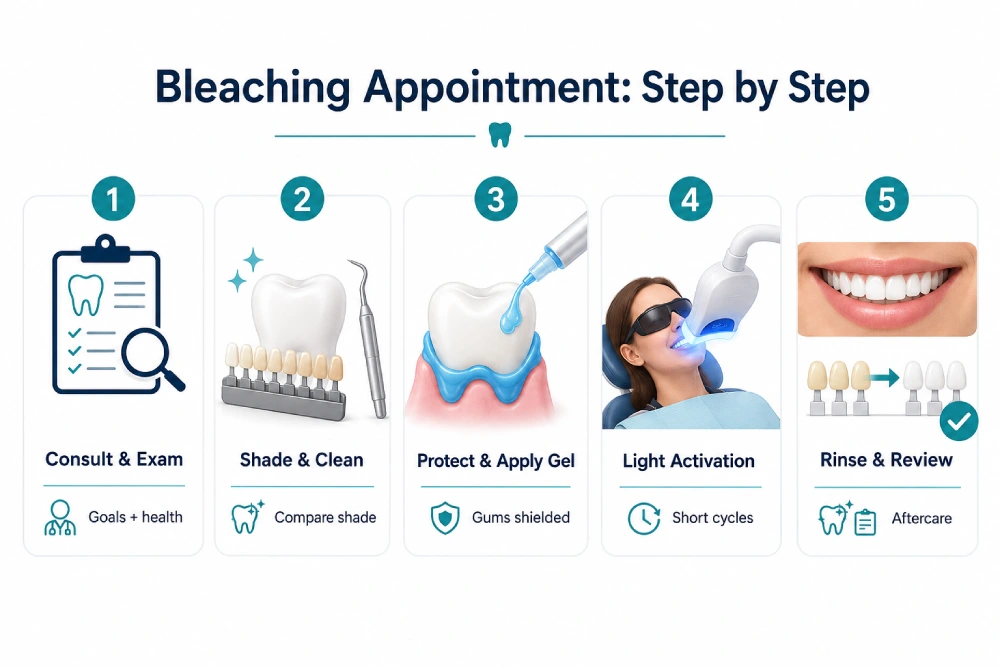
We want your appointment to feel calm and predictable. A typical in-office bleaching visit includes:
- Consultation and exam: We check your teeth and gums, review your medical history, and discuss what you would like to change about your smile.
- Shade check and Clean: We compare your current colour to a shade guide and may take photos, so you can see your progress.
- Protect and Apply Gel for cleaning if needed: If there is plaque or tartar, we recommend a cleaning first so the gel can reach your enamel evenly. We carefully shield your gums and apply the bleaching gel to your teeth.
- Light or laser activation (if used): You sit back and relax while the gel is activated in several short cycles.
- Final rinse and review: We remove the gel, rinse, and compare your new shade. Then we give you clear aftercare instructions.
Is Teeth Bleaching Safe?
According to the American Dental Association and the National Health Service, when bleaching is done correctly and in moderation, teeth bleaching is considered safe for most people. The most common side effects are:
- Temporary tooth sensitivity
- Mild gum irritation if the gel touches soft tissue
These effects usually settle down on their own soon after treatment or when the schedule is adjusted. We can also recommend desensitizing toothpaste or in-office fluoride to make the process more comfortable for you.
Problems are more likely when people overuse products, mix multiple kits, or skip professional guidance. That is why we always start with a proper exam and only suggest a bleaching plan that makes sense for your teeth.
How Long Do Results Last?
Everyone’s lifestyle is different, so results last for different lengths of time. In general, according to clinical experiences, many patients enjoy whiter teeth for several months to a couple of years after professional bleaching, especially if they:
- Keep up with regular exams and cleanings
- Brush and floss daily
- Limit or rinse after coffee, tea, red wine, and tobacco
Touch-ups are normal and do not mean your treatment failed. Some people like a short tray touch-up once or twice a year, while others only repeat in-office bleaching every few years before important occasions. We will help you find a schedule that keeps your teeth looking bright without overdoing it.
Aftercare: The White Diet for 48 Hours
Right after Vancouver teeth bleaching, your enamel is a little more open to staining, so the first two days are important. We often recommend a simple “white diet” for about 48 hours. That means choosing lighter foods and drinks such as water, milk, plain chicken, rice, and pasta, and avoiding strong colours.
Try to avoid, or at least minimise:
- Coffee, black tea, red wine, dark juices
- Curries, tomato sauces, berries
- Smoking or vaping
After that initial window, you can gradually return to your usual diet, keeping in mind that frequent dark drinks and tobacco will cause stains to return faster.
Why Choose Hemlock Dental for Vancouver Teeth Bleaching?
Choosing Vancouver teeth bleaching is about more than just price or speed. At Hemlock Dental, bleaching is part of your overall oral health and cosmetic plan, not a quick one-off service. Your treatment is always dentist-led, and your options are explained clearly, including when bleaching is not the best choice and another cosmetic solution would serve you better. If you are unsure whether whitening or deeper bleaching suits you best, a simple consultation is the safest way to find out and get a personalised recommendation instead of guessing from products on a shelf. Do not hesitate to contact us to know teeth bleaching and teeth whitening cost in Vancouver.
FAQs
What’s the difference between teeth bleaching and teeth whitening?
Teeth whitening is a general term for making teeth look brighter, while teeth bleaching usually refers to dentist-grade peroxide treatments that lighten the internal colour of natural tooth enamel.
Can bleaching remove tetracycline stains?
Bleaching can often soften and lighten tetracycline stains, but results vary and deep banded discolouration may need multiple sessions and sometimes veneers for a fully even result.
Will my crowns or veneers change color with bleaching?
No. Bleaching gels only lighten natural enamel and dentin, so crowns, veneers, and tooth-coloured fillings will stay the same shade and may need replacement if you want them to match.
Is professional bleaching safe for my enamel?
When planned and supervised by a dentist, and not overused, professional bleaching is generally considered safe for enamel, with temporary sensitivity as the most common side effect.
How many shades whiter can bleaching make my teeth?
Most patients see a noticeable improvement of several shade-guide steps, but the exact change depends on your starting colour, stain type, enamel thickness, and the method used.
Can I get bleaching if I have sensitive teeth?
Often yes, as long as a dentist tailors the plan with gentler gels, shorter sessions, and desensitizing products, and rules out underlying problems that might be causing your sensitivity.
How often can I safely bleach my teeth?
Bleaching is usually done as a short course with occasional touch-ups; your dentist will recommend a safe interval, but continuous back-to-back bleaching is not advised.
Is teeth bleaching covered under the Canada Dental Care Plan (CDCP)?
Because bleaching is usually considered cosmetic, CDCP and private plans often provide little or no coverage, so you should have the clinic check your specific benefits in advance.
How much does teeth bleaching cost in Vancouver?
Teeth bleaching in Vancouver typically costs CAD $300–$800, depending on the treatment and clinic.
Where can I get professional teeth bleaching in Vancouver?
You can get professional teeth bleaching at Hemlock Dental Clinic, which offers in-office and take-home whitening treatments.