Apicoectomy is a relatively simple dental procedure performed when the root canal therapy has not resolved the dental infection and is performed to treat infection at the apex (tip) of the tooth root. The dentist doesn’t remove the tooth, they simply remove the infected root tip and seal it to preserve your natural tooth. This procedure is frequently available from an expert endodontist or a dental clinic in Vancouver and is known to have a high success rate ranging from 85-90%. We will find out more details about Apicoectomy in this article.
Why Would You Need an Apicoectomy?
An apicoectomy (ah-pee-koh-EK-toh-mee) is a very precise surgical procedure that removes the end of the root of the tooth and any infected tissue around it.
Other names may be used for the same procedure, such as root-end surgery, root-end resection, apical surgery or even retrograde root canal treatment. These treatments are all similar in idea and are known by a variety of names, but the idea is the same: treating infection from the outside of the root when the root is too far up the tooth to access by root canal.
Today, apicoectomy is a conservative and tooth-preserving procedure, particularly if the rest of the tooth is structurally sound and functional.
Apicoectomy vs Root Canal: What’s the Difference?
Although both procedures aim to save your natural tooth, they differ in how they access and treat the infection. A root canal cleans from the inside, while an apicoectomy cleans from the outside. Here are more details:
| Factor | Root Canal | Apicoectomy |
|---|---|---|
| Approach | Through the crown (top of tooth) | Through the gum (side of root) |
| Type | Non-surgical treatment | Minor surgical procedure |
| Target | Infected pulp inside tooth | Root tip + surrounding tissue |
| Use | First-line treatment | After root canal fails |
Which One Do You Need? Apicoectomy vs Retreatment
When a root canal fails, your dentist may suggest either root canal retreatment or apicoectomy. The right choice depends on the specific condition of your tooth.
| Factor | Retreatment | Apicoectomy |
|---|---|---|
| Access | Inside the tooth | Through gum surgery |
| Best for | Missed canals, new infection | Persistent root-tip infection |
| Crown removal | Usually required | Not required |
| Recovery | 1–3 days | 3–7 days |
| Success rate | ~75–80% | ~85–90% |
If removing a crown could damage the tooth or if the infection is localized at the root tip, apicoectomy is often the more predictable and less invasive option overall.
Apicoectomy vs Tooth Extraction
When patients are worried about a dental infection, they look for the information on extract tooth vs root canal. Again, the same comparison could be made.
In dentistry, the best course of treatment is always to keep the natural tooth in place, which is what an apicoectomy will help you to do. Preserving your tooth serves to maintain natural bite alignment, jaw bone density and overall oral health.
In the short-term, extraction might seem more straightforward, but in the long-term, it can result in further procedures such as implants or bridges, which have greater long-term expenses and are longer procedures.
This is why dentists will try apicoectomy before extraction unless it is not possible to save the tooth.
The Apicoectomy Procedure: Step-by-Step
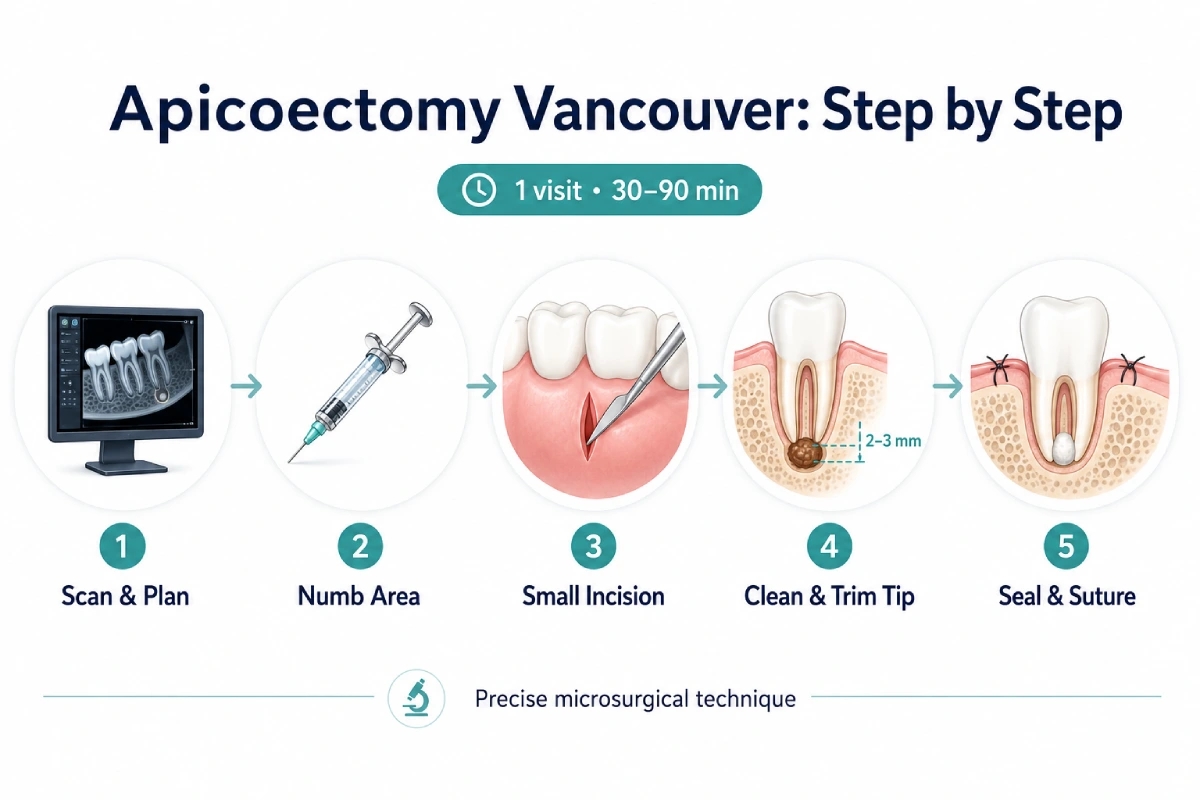
The procedure is typically completed in one visit at a specialized dental clinic in Vancouver and takes about 30 to 90 minutes.
- Detailed imaging such as X-rays or CBCT scans to locate the infection
- Local anesthesia to completely numb the area
- A small incision in the gum near the affected tooth
- Accessing the root tip through the bone
- Removal of infected tissue and cleaning of the area
- Trimming approximately 2–3 mm of the root tip
- Sealing the root with a biocompatible filling material
- Placing sutures to allow healing
With modern microsurgical techniques are used, the procedure is highly precise and designed to minimize trauma to surrounding tissues.
Is an Apicoectomy Painful?
You will not feel any pain during the procedure as it is fully anaesthetized with local anaesthetic. Only slight pressure or movement is felt by most patients. It is normal to have some mild soreness or swelling after the procedure for a few days. Typically, this can be treated with regular painkillers and isn’t as severe as some individuals may imagine. Recovering is usually easier and more comfortable than extracting a tooth.
How Long Does an Apicoectomy Take?
Duration will vary based on the location and the complexity of the roots of the tooth. It usually takes 30-90 minutes. The front teeth typically take less time, as they only have one root. Multiple-rooted molars might take longer. Typically, this process takes place in one visit only, so you will not need to come in more than once.
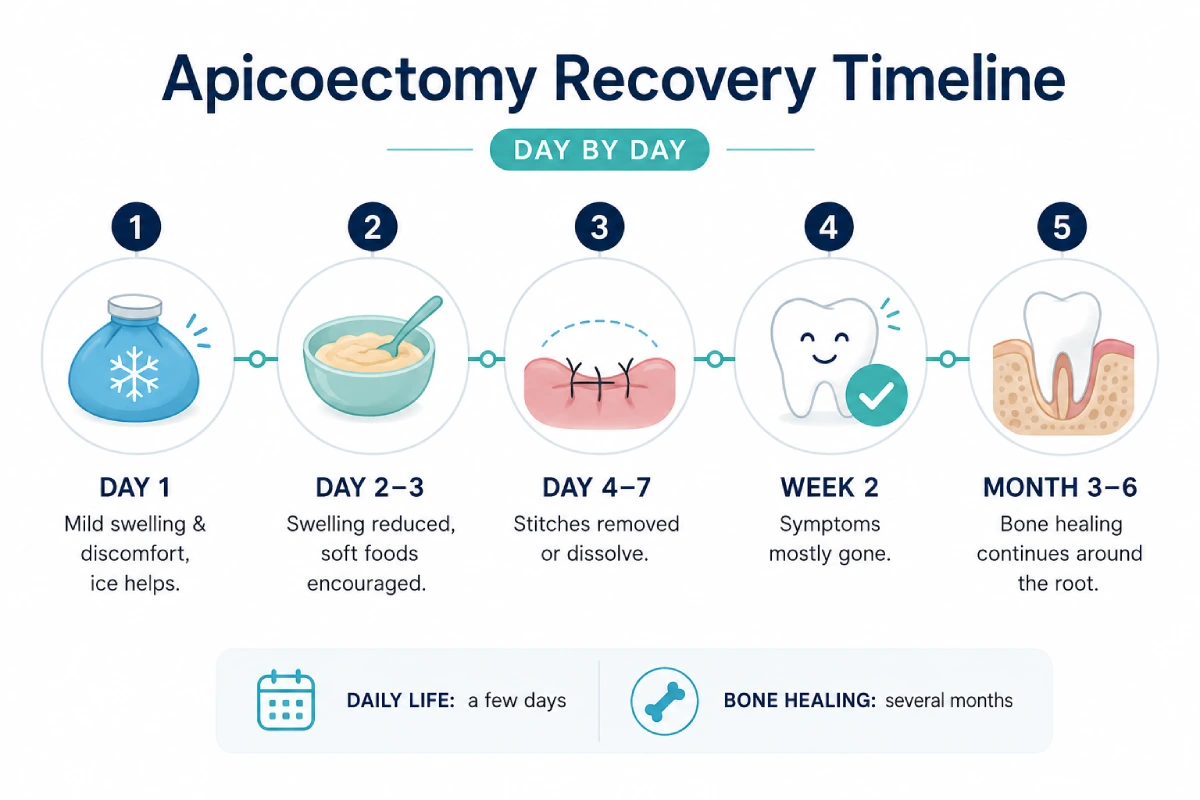
Apicoectomy Recovery Timeline (Day-by-Day)
Knowing what to expect during recovery can decrease anxiety and create reasonable expectations.
- Day 1: Mild swelling and discomfort starts, ice will help to reduce swelling and inflammation.
- Day 2-3: Swelling is reduced, soft foods are encouraged.
- Day 4–7: The stitches are either removed or fall off on their own.
- Week 2: All symptoms are subsided.
- Month 3–6: The bone begins to gradually heal around the root.
Patients recover from everyday life within a few days, although the healing of the internal organs takes place during several months
Aftercare: Do’s and Don’ts
Following proper aftercare is key to a smooth recovery.
| Do | Don’t |
|---|---|
| Apply ice during first 24 hours | Avoid brushing near the surgical area initially |
| Eat soft foods | Avoid hard or crunchy foods |
| Take prescribed medications | Do not smoke |
| Rinse gently with salt water | Avoid aggressive rinsing |
| Rest and keep head elevated | Avoid intense physical activity |
Apicoectomy Success Rate
Apicoectomy Vancouver has become much more reliable thanks to modern dental technology.
- Success rate: approximately 85–95% with microsurgical techniques
- Older methods had lower success rates (~60–70%)
- Outcomes improve with experienced endodontists and advanced tools
Clinical research published on PubMed supports these improved success rates, especially when microscopes and proper materials are used.
Possible Risks and Complications
Although considered safe, there are some potential risks.
- Mild swelling or bruising
- Temporary numbness
- Sinus involvement for upper teeth
- Rare nerve irritation
- In some cases, the infection may return
Most of these complications are temporary and manageable with proper care.
How Much Does an Apicoectomy Cost?
The cost of apicoectomy Vancouver depends on the tooth and complexity.
- Front tooth: $700–$1,200
- Premolar: $800–$1,400
- Molar: $1,000–$1,800
Many dental insurance plans partially cover endodontic surgery. Compared to extraction and implant placement, apicoectomy is often more cost-effective in the long term.
How Long Does a Tooth Last After an Apicoectomy?
A tooth that is treated successfully can stay in your mouth for many years or a lifetime. The lifespan is influenced by good oral hygiene as well as regular dental visits and the maintenance of the restoration (crowns).
Real Patient Scenarios
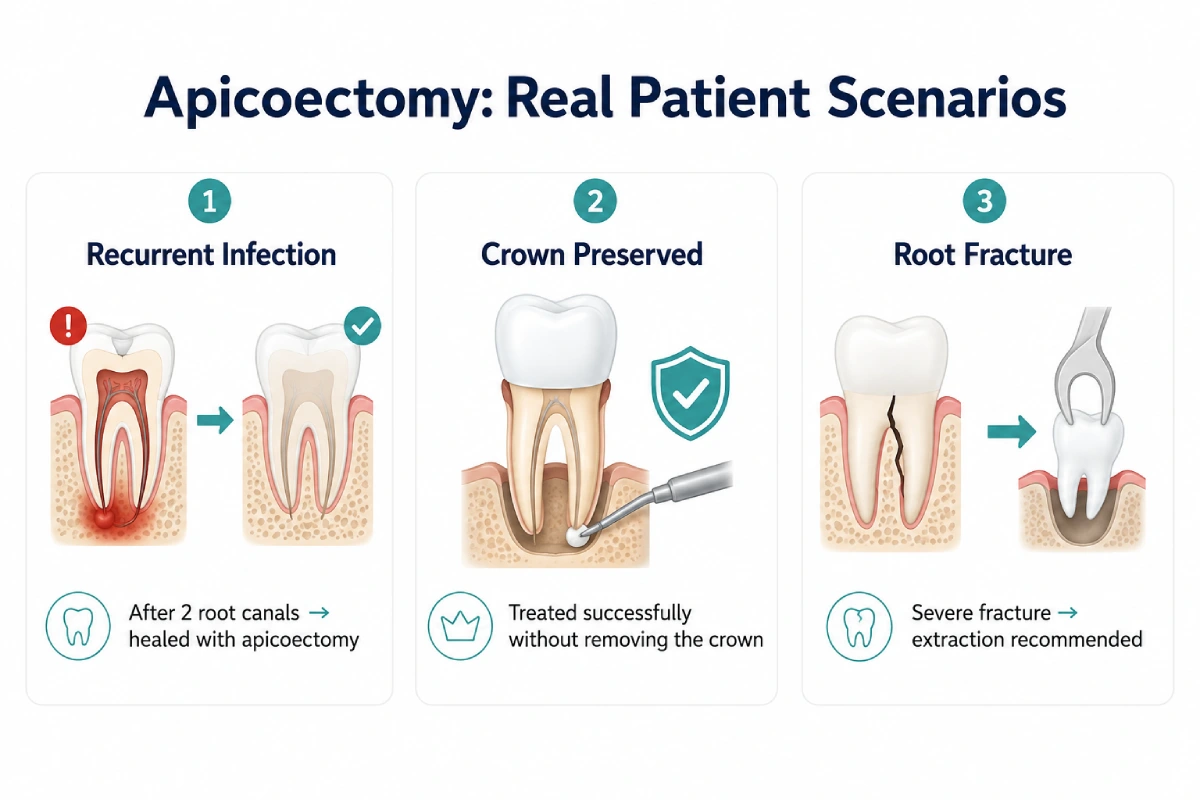
Case 1:
A patient who suffered from recurrent infection following two root canal treatments had complete healing after apicoectomy was performed.
Case 2:
A crown which could not be removed from a tooth was successfully treated without compromising the crown.
Case 3:
A severe root fracture was present which made this tooth unsalvageable, and extraction was recommended.
What Endodontists Look for Before Recommending Apicoectomy
An endodontist will thoroughly examine the tooth with computed tomography (CBCT) images to determine the root structure and where the infection is before recommending an apicoectomy. They also take into account if the tooth can be saved and if microsurgery will enhance the chances of success.
Patient Reviews & Testimonials
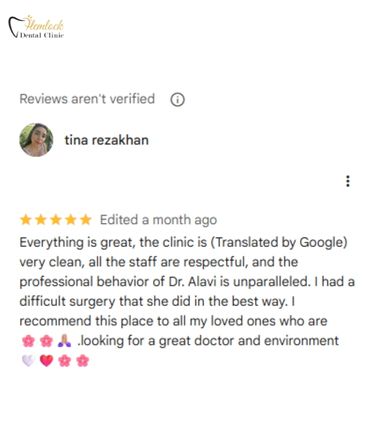
Patients often report positive experiences. One of our patients, Tina Rezakhan said that:
“Everything is great, the clinic is very clean, all the staff are respectful, and the professional behavior of Dr. Alavi is unparalleled. I had a difficult surgery that she did in the best way. I recommend this place to all my loved ones who are looking for a great doctor and environment.”
Apicoectomy in Vancouver: Choosing the Right Dental Clinic
If you are considering apicoectomy Vancouver, choosing the right dental clinic is essential for both comfort and success. Look for a clinic that offers advanced imaging like CBCT, uses microsurgical techniques, and has an experienced endodontist.
At Hemlock Dental Clinic, we provide all the required treatments for our patients. If you need help, contact us now to set an appointment.
FAQs
Is an apicoectomy worse than a root canal?
No, an apicoectomy is not necessarily worse, it’s just a different approach. While it involves minor surgery, the recovery is usually manageable and often easier than patients expect.
Can I drive home after an apicoectomy?
Yes, you can drive yourself home. The procedure uses only local anesthesia, which numbs the treatment area but doesn’t affect your overall alertness or coordination. Unlike general anesthesia or sedation, you’ll be fully awake and capable of driving safely after the appointment.
Will I need antibiotics?
Not always. Your dentist will prescribe antibiotics only if there’s a higher risk of infection based on your specific case or medical history. In many straightforward apicoectomy procedures, antibiotics aren’t necessary because the infected tissue is completely removed during surgery.
Can I go to work the next day?
Most patients can return to work within one to two days, depending on the nature of their job. If your work involves heavy physical activity or public speaking, you might want to take an extra day off..
What if the apicoectomy fails?
If the infection persists or returns after an apicoectomy, your dentist will evaluate the situation with follow-up imaging. Options may include a second apicoectomy (though rare), root canal retreatment, or extraction if the tooth cannot be saved.
Do I need a crown after an apicoectomy?
Not necessarily. Unlike retreatment, apicoectomy doesn’t go through the top of the tooth, so it usually doesn’t weaken the tooth structure. You’ll only need a crown if your tooth already has significant damage or decay.
Is apicoectomy covered by insurance?
Many dental insurance plans partially cover apicoectomy under endodontic surgery or periodontal surgery benefits. Coverage varies by plan, so it’s best to check with your insurance provider beforehand.
How is apicoectomy different from a regular tooth extraction?
Apicoectomy saves your natural tooth by removing only the infected root tip, while extraction removes the entire tooth. Keeping your tooth helps preserve jawbone density, maintains natural bite alignment, and avoids the need for costly replacements like implants or bridges.
Can I eat normally after an apicoectomy?
Not immediately. For the first few days, stick to soft, warm foods to avoid irritating the surgical site. Avoid hot, spicy, crunchy, or hard foods until your dentist says it’s safe.
Will my tooth feel different after the procedure?
No, once fully healed, your tooth should feel completely normal. During the first week or two, you might notice some sensitivity or awareness around the area, but this is temporary.