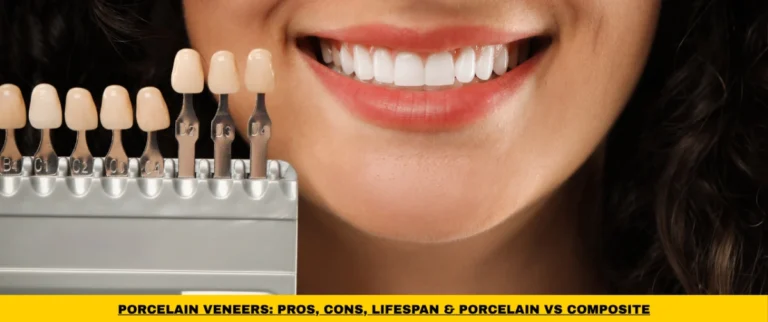
Porcelain veneers are thin ceramic shells placed over the front surface of teeth to improve their color, shape, and overall appearance. They are popular because they provide a natural look, resist stains well, and typically last around 10–15 years with proper care.
Compared with composite veneers, porcelain requires more planning, usually involves enamel preparation, has a higher upfront cost, and is completed over two visits.
This guide explains the benefits, limitations, lifespan, and key differences between porcelain and composite veneers to help you decide which option fits your needs.
Porcelain vs Composite Veneers: Which Option Is Better?
Porcelain and composite veneers can both improve the appearance of teeth, but they differ in durability, appearance, maintenance and treatment process.
|
Feature |
Porcelain Veneers |
Composite Veneers |
|
Material |
Ceramic |
Composite resin |
|
Lifespan |
10–15 years |
4–7 years |
|
Appearance |
More natural translucency |
Good cosmetic improvement |
|
Stain resistance |
Higher |
Lower |
|
Tooth preparation |
Usually requires enamel removal |
Minimal preparation |
|
Visits needed |
Usually 2 visits |
Usually 1 visit |
|
Repairs |
Usually replacement |
Often repaired |
|
Cost |
See full veneers cost guide |
Pros of Porcelain Veneers
Benefits of porcelain veneers are:
- Natural appearance
Porcelain reflects light similarly to natural tooth enamel, creating a more realistic appearance. - Better stain resistance
Porcelain is less likely to stain from coffee, tea and everyday foods. - Longer lifespan
With good care, porcelain veneers usually last 10–15 years. - Improve tooth appearance
They can improve tooth colour, shape, size and minor cosmetic concerns. - Less coverage than crowns
Veneers cover the front surface of teeth instead of the entire tooth like a crown.
Cons of Porcelain Veneers
Disadvantages of porcelain veneers include:
The treatment is irreversible
A small amount of enamel is usually removed, meaning veneers are considered a permanent cosmetic treatment.
Higher upfront investment
Porcelain costs more than composite because each veneer is custom-made.
Requires multiple appointments
The process normally involves preparation, laboratory work and final placement.
May be affected by teeth grinding
Clenching or grinding can increase the risk of chips or cracks.
The color cannot be changed later
Porcelain veneers cannot be whitened after placement.
Who Should Choose Porcelain Veneers?
Porcelain veneers may be suitable depending on your goals, tooth condition, and expectations.
Porcelain may be a good choice if:
- You want a long-lasting cosmetic improvement
- You have noticeable discoloration
- You are treating several front teeth
- You want a highly natural appearance
Composite is better if:
- You need a small repair
- You prefer a lower-cost option
- You want same-day treatment
- You want a more reversible choice
Talk with your dentist first if:
- You grind your teeth
- Your enamel is thin
- You need braces or orthodontic treatment
Porcelain Veneer Timeline
The porcelain veneer process usually takes two appointments, with laboratory time between visits.
|
Appointment |
What happens |
Time |
|
First visit |
Examination, shade selection, preparation, scan/impressions and temporary veneers |
Around 90 minutes |
|
Laboratory stage |
Custom porcelain veneers are created |
1–2 weeks |
|
Second visit |
Final fitting, bonding and bite adjustment |
60–90 minutes |
For the complete veneer treatment process, see our dental veneers in Vancouver: what to expect guide.
What Dental Issues Can Veneers Address?
If you’re thinking about getting veneers in Vancouver, you probably have one or more specific dental issues that you’d like to address, such as:
- Chipped, Broken Teeth
- Discoloured Teeth
- Gaps Between Teeth
- Misaligned, Misshapen Teeth
- Worn Down Teeth
Cost of Porcelain Veneers in Vancouver
The cost of porcelain veneers depends on how many teeth are being treated, the complexity of your case, and your treatment plan.
For detailed pricing and the factors that affect the final cost, visit our Veneers Cost in Vancouver guide.
How to Care for Porcelain Veneers
Porcelain veneers do not need complicated care, but good daily habits can help keep them looking their best.
Brush your teeth twice a day with a soft toothbrush and non-abrasive toothpaste. Floss every day and continue regular dental checkups and cleanings.
Try not to bite hard objects such as ice, pens, or fingernails with your veneers. If you grind or clench your teeth, talk to your dentist about whether a night guard may be helpful.
Porcelain Veneers at Hemlock Dental Clinic
At Hemlock Dental Clinic, porcelain veneer treatment begins with evaluating your teeth, bite and cosmetic goals. Dr. Alavi focuses on shade selection, planning and creating veneers that match your natural smile.
FAQ
How long do porcelain veneers last?
Porcelain veneers usually last around 10–15 years with proper care and regular dental checkups. Their lifespan can vary depending on your oral hygiene, bite pressure and daily habits.
Do porcelain veneers stain?
Porcelain veneers are highly resistant to stains from coffee, tea and everyday foods. However, the natural teeth around them can still change colour over time.
Is getting porcelain veneers painful?
Most patients experience little to no pain during porcelain veneer placement because the procedure is performed with local anaesthesia if needed. Some temporary sensitivity may occur after preparation.
Are porcelain veneers permanent?
Porcelain veneers are considered a long-term cosmetic treatment because a small amount of enamel is usually removed. Porcelain veneers are considered a long-term cosmetic treatment, but they do not last forever. With proper care, they usually need replacement after many years.
Are porcelain veneers worth it?
Porcelain veneers can be worth it if you want a natural-looking, durable improvement for multiple cosmetic concerns. They may not be the best choice for minor issues that can be treated with simpler options.
Can porcelain veneers be repaired?
Small chips may sometimes be adjusted or polished, but damaged porcelain veneers are often replaced rather than repaired. Your dentist can check the damage and recommend the best solution.