
If you’ve ever delayed a dental cleaning because you’re worried it might hurt, you’re not alone. Many people associate dental visits with sharp instruments, scraping, and sore gums. They believe dental cleaning is painful. In reality, for most patients, standard cleaning typically causes only mild to moderate discomfort rather than significant pain. So, do dental cleanings hurt? Not really! Stay with us in Hemlock Dental Clinic to find out the steps and more details. To start fast, fill out the form on this page or contact us now to reserve a time with Dr. Farahnaz Alavi.
Why People Think Cleanings Hurt
Do dental cleanings hurt, really? Most individuals link the dentist to the negative experiences of dental cleaning Vancouver they had in the past, so the fear of the dentist multiplies every sound and feeling experienced. Some leave several years between visits, thus their gums are already inflamed and bleed easily, and that has the ability of making a normal cleaning harder than it is. Friends’ or online posts of people who have painful visits for dental cleaning contribute to more fear, although they are normally about heavy tartar, gum disease, or deep cleaning, rather than a routine check-up.
What Actually Happens Step by Step
To answer the question of do dental cleanings hurt, and knowing how long does a cleaning at the dentist take, let’s know its steps:
- To start with, the hygienist discusses your case, talking with you, examining your medical history, and evaluating your teeth and gums using a small mirror and a probe to examine the presence of plaque, tartar, and evidence of early gum disease.
- When necessary, X-rays are used to explore spaces between the teeth and under the gums that cannot be observed during a simple visual examination, such as undetected decay, loss of bone, or severe amounts of tartar.
- The hygienist will then apply hand instruments and/or an ultrasonic scaler (a tool that vibrates and sprays water) to scrape tartar off above and just under the gumline.
- The hygienist may take his/her time to clear the tartar by tooth by tooth, and suction water and periodically check in with you, particularly where there might be a sensitive area or gum inflammation.
- Polishing the teeth is then done with a rotating rubber cup of a special polishing paste, which smoothes out the surfaces and cleanses the tooth surfaces of soft plaque and coffee, tea, or smoking stains.
- Once you have polished, you floss your teeth to clean in-between them, and make sure that they are not bleeding heavily, or any gums are healthy; and it helps remove any unwanted paste or debris.
- This is then followed by putting a fluoride gel, foam, or varnish on the teeth and letting them sit for a few minutes to harden the enamel and make it less susceptible to further cavities.
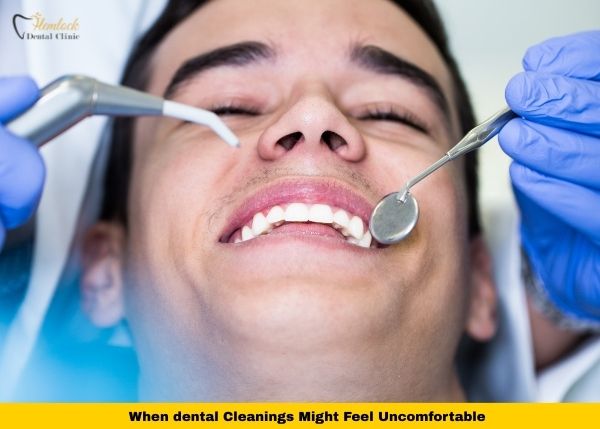
When Cleanings Might Feel Uncomfortable
Cold water and the pressure of instruments are more likely to touch the nerves in sensitive teeth or in thin enamel, resulting in sore cleanings in either case, and gum recession can also lead to sore cleanings. When you have periodontitis, inflamed gums are highly reactive to light touch and therefore the tenderness is experienced, and more bleeding is observed during and immediately after the visit. Missing routine cleaning, flossing or visiting the dentist causes the tartar to accumulate and any subsequent cleaning is more painful. Read about how long after dental cleaning can I eat here.
What Patients Say
One of our patients, Viktoriia Berezovska, stated that:
“I had only the best experience after visiting the Hemlock dental clinic.Professional approach of all staff and reception. Diagnostic, cleaning and treatment – everything is professional and painless. Now I have a beautiful smile. Special thanks to Dr. Alavi for her professional work, explanations and suggestions for treatment. For me, this is the first dentistry in Canada, which I would like to recommend to acquaintances and friends.”

How Dentists Minimize Pain
At Hemlock Clinic, soft ultrasonic scalers and fine hand instruments that vibrate the plaque off rather than scrape it off are used. If you feel nervous or sensitive, we may apply numbing gel on the gums or give you local anesthesia on the deeper work, or just slow down and change technique. Most of the preventive dentistry in our clinic is focused on communication, frequent check-ins, and adjusting the cleaning schedule to ensure that you arrive in time before things get painful.
Tips to Make Your Cleaning More Comfortable
Here are some tips for you that can make youe dental cleaning more comfortable:
- Brush in the morning and evening, and floss once in 12-14 weeks before your appointment, which helps in calming swollen gums and trimming bleeding during cleaning.
- Flossing is difficult to do, so when you begin, only do one or two teeth and increase the number of teeth every day until your gums become accustomed to the process.
- When you receive a fluoride treatment, wait 30-60 minutes before you get to eat so that it can be utilized to its maximum effectiveness on your teeth.
- Following your visit, you should eat soft, non-acidic foods (such as yogurt, eggs or soup) in case your teeth or gums are somewhat sensitive.
- Attempt to make routine preventive visits (around every 6 months) or as your dentist advises. This way, there is less tartar to remove each time, and cleaning would be faster and easier.
Conclusion: Key takeaway
We answered the question of do dental cleanings hurt. Dental cleaning should not actually be painful; you can experience some temporary pain and pressure, particularly when your gums are already sore. Through the selection of a mild preventive clinic in Vancouver, open communication with your dentist, and home oral care, you can make cleanings fast, comfortable, and as effective as possible in making your smile safe.
Take the Stress out of Your Dental Cleaning at Hemlock Clinic
If you are looking for the best dental clinic Vancouver, trust us at Hemlock Dental Clinic. We focus at individuals who fear pain or unpleasant experiences, and a relaxing atmosphere, and a gentle and preventive style of treatment. Our team guides you step by step, responding to your questions in a simplistic language, and can tailor the speed in case you are anxious or sensitive. Contact us now at Hemlock Dental Clinic or fill out the form to set your appointment fast.
FAQs
Do dental cleanings hurt?
Most people experience no sharp pain during a regular cleaning, only a sense of pressure and slight irritation, in the case of a regular checkup and proper home care.
How long does a dental cleaning take?
An average cleaning and examination typically requires 45-60 minutes, and this is determined by the amount of plaque and tartar that has to be removed. In case you need X-rays or other treatment, your visit will be extended a bit.
How long after a dental cleaning can I eat?
In case of no fluoride, you can normally have food immediately, but you will find your teeth a little sensitive. Most dentists recommend that a patient wait approximately 30–60 minutes after the administration of a fluoride drink to ensure full functionality.
How often should I get a dental cleaning?
The majority of adults should visit a dentist every 6 months to avoid cavities and gum disease, though there are individuals who are at higher risk. Contact us now to set your appointment