
How Bad Does a Root Canal Hurt? (Pain Scale 1–10)
Most people are surprised by how manageable a root canal feels with today’s numbing and gentle techniques. During the actual procedure, most patients rate the pain around 1–3 out of 10, which is about the same as getting a regular filling. You might feel some pressure or vibration, but sharp pain is not expected, and your dentist can always add more numbing if you feel anything uncomfortable.
What usually hurts more is the tooth before treatment, because of infection and inflammation, root canal therapy is actually what stops that intense pain. A little soreness for a day or two afterward is normal and usually responds well to over‑the‑counter pain medication and following your dentist’s aftercare instructions. If you feel pain and need help, contact us now to set a quick appointment with Dr. Alavi
When Is Dental Pain After a Root Canal Not Normal
Dental pain after a root canal is not normal when it feels worse, not better. If the tooth still hurts a lot after several days, if the pain is sharp or throbbing, or it wakes you up at night, that’s a red flag. It’s also not normal if you notice swelling in your face or gum, a pimple on the gum, bad taste, bad smell, or you feel feverish or sick. In these cases, don’t wait and hope it goes away, call your dentist right away so they can check what’s going on and fix the problem. Are you feeling pain now? Contact us.
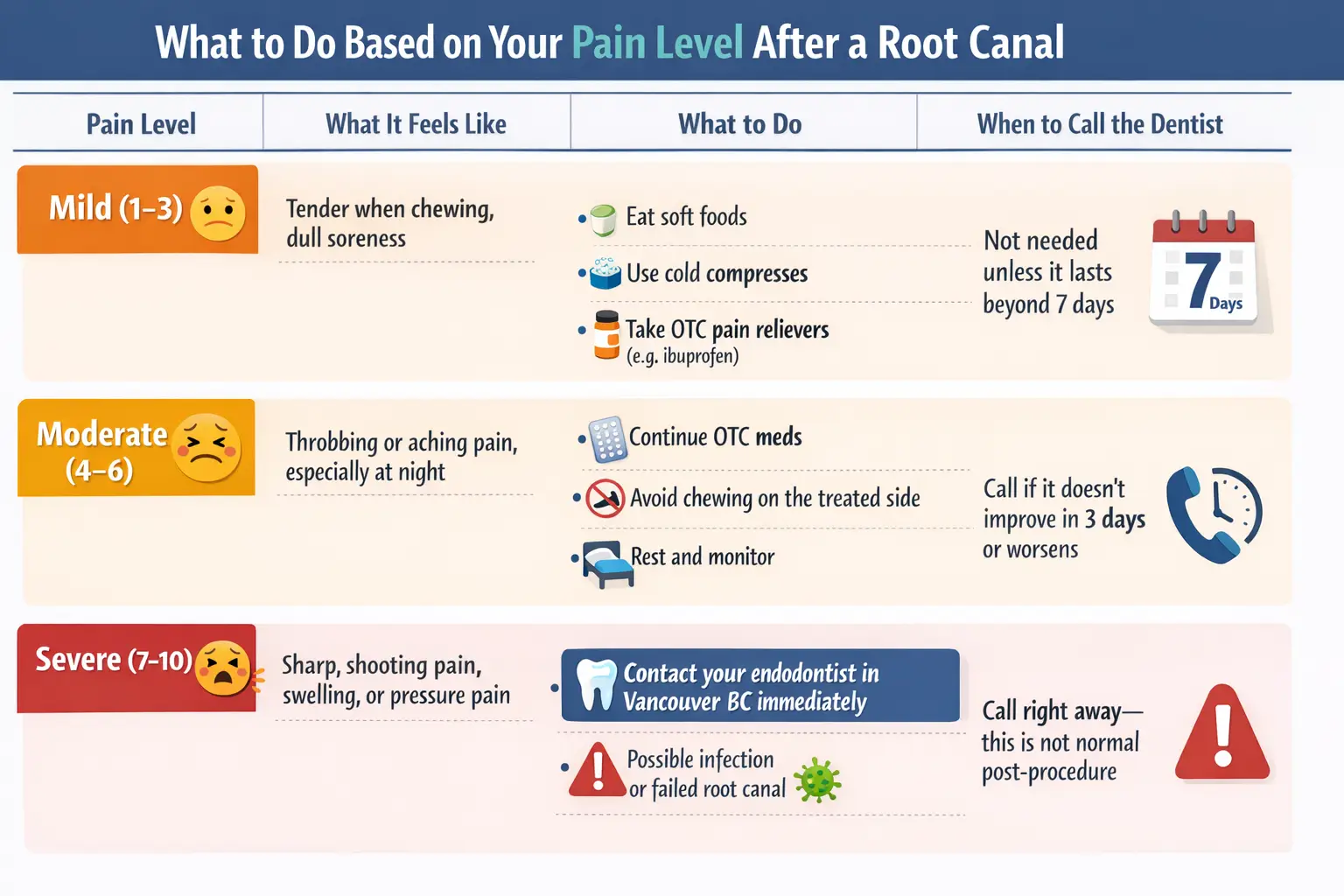
What to Do Based on Your Pain Level After a Root Canal
| Pain Level | What It Feels Like | What to Do | When to Call the Dentist |
| Mild (1–3) | Tender when chewing, dull soreness | – Eat soft foods
– Use cold compresses – Take OTC pain relievers (e.g. ibuprofen) |
Not needed unless it lasts beyond 7 days |
| Moderate (4–6) | Throbbing or aching pain, especially at night | – Continue OTC meds
– Avoid chewing on the treated side – Rest and monitor |
Call if it doesn’t improve in 3 days or worsens |
| Severe (7–10) | Sharp, shooting pain, swelling, or pressure pain | – Contact your endodontist in Vancouver BC immediately
– Possible infection or failed root canal |
Call right away—this is not normal post-procedure |
Still unsure if your pain is normal? Contact Hemlock Dental today for expert guidance and peace of mind.
Does it hurt after a root canal?
Some mild discomfort is normal for a few days. This is typically due to inflammation around the treated tooth. However, if the pain persists or worsens, it could signal a complication like a failed root canal.
What To Do About Severe or Lasting Pain
If you experience ongoing or intense pressure or throbbing, don’t ignore it. Try:
- Over-the-counter pain medication
- Cold compresses
- Avoiding hard foods on the treated side
If symptoms continue, contact your dentist or an Root canal Vancouver right away. In rare cases, retreatment or additional procedures may be necessary.
Learn more about what to do if your tooth with a root canal hurts with pressure here.
Why Might There Be Pain After a Root Canal?
- Inflammation of surrounding tissues
- Incomplete cleaning of the root canals
- Cracked tooth structure
- Missed canals or hidden infections
All of these can contribute to discomfort or the need for additional treatment. It’s why working with an experienced provider matters.

Why Choose Hemlock Dental Clinic for Your Root Canal?
At Hemlock Dental, we combine experience, gentle care, and the latest dental technology to ensure your root canal is pain-free and effective. Dr. Farahnaz and her team offer personalized treatment and clear aftercare guidance as part of our comprehensive general dentistry services.
How much pain is normal?
Mild soreness or tenderness when chewing is normal for up to a week. Swelling or sharp pain is not. If you experience these symptoms, consult your dental clinic in Vancouver BC to rule out complications.
How long will the pain last after a root canal?
For most patients, post-procedure discomfort subsides within 3–7 days. Pain that lasts longer may be a sign of a failed root canal or infection.
Should you be nervous about a root canal?
Not at all. Thanks to modern dentistry, root canals are no longer the painful procedures they once were. Most patients are pleasantly surprised by how quick and easy it feels.
How to tell if a root canal failed?
Signs of a failed root canal include:
- Persistent or returning pain
- Swelling or pus
- Pain when biting or applying pressure
- A pimple-like bump near the tooth
In such cases, you may need retreatment or an alternative treatment, such as dental implant.
Can a root canal fail? Learn more in our full article: Failed Root Canal
Pain Recovery Timeline
Here’s what to expect after your root canal:
- Day 0–2: Mild swelling or pressure sensitivity. Rest, apply cold compresses, and use OTC pain relief.
- Day 3–7: Pain should steadily decrease. If swelling or discomfort increases, call your dentist.
After Week 1: Monitor for unusual symptoms and plan for your permanent crown placement.
Managing Pain at Home (Safe & Evidence-Based)
- Over-the-counter medication (follow package instructions and consult if unsure)
- Cold compress for 15–20 minutes at a time
- Warm saltwater rinses 2–3 times a day
- Soft diet to avoid pressure on the treated tooth
- Elevate your head when sleeping to reduce throbbing

What not to do after a root canal?
To support healing:
- Don’t chew on the treated side until the crown is placed
- Avoid smoking or drinking alcohol
- Skip crunchy or hard foods
- Don’t ignore pain that doesn’t improve
Proper root canal aftercare is essential for lasting results.
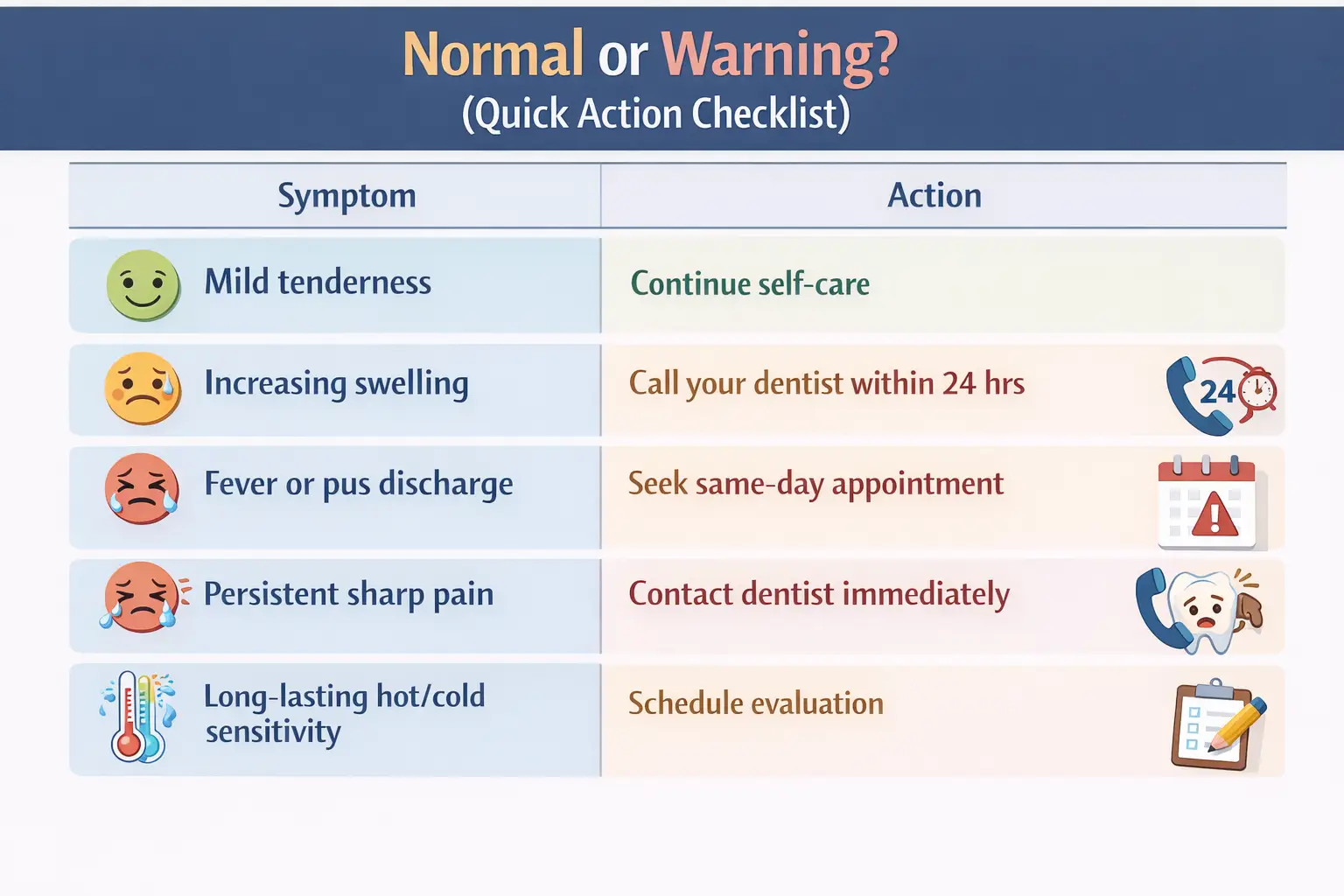
Normal or Warning? (Quick Action Checklist)
| Symptom | Action |
| Mild tenderness | Continue self-care |
| Increasing swelling | Call your dentist within 24 hrs |
| Fever or pus discharge | Seek same-day appointment |
| Persistent sharp pain | Contact dentist immediately |
| Long-lasting hot/cold sensitivity | Schedule evaluation |
Let’s Take the Pain Out of the Picture
If you’re still feeling discomfort or unsure whether your tooth pain is normal, contact Hemlock Dental today. Our compassionate team, led by Dr. Farahnaz, is here to help.
Book your visit with a trusted dental clinic in Vancouver BC for professional care and peace of mind.
Henry’s Story: From Worry to Relief
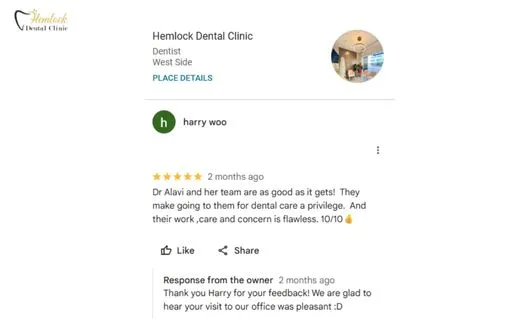
Henry Allan came to Hemlock Dental expecting the worst—a painful root canal experience. But from the moment he arrived, the warm welcome from the receptionist, assistant, and Dr. Farahnaz put him at ease. The treatment was not only pain-free but also impressively smooth and affordable. Today, Henry says he feels great and has never had a single issue post-treatment.
Most cases of dental pain after a root canal are temporary and improve within a few days with proper aftercare.
FAQ
How long should pain last after a root canal?
Most people feel some mild soreness for a few days after a root canal, sometimes up to about a week. If the pain is not slowly getting better after that, it’s better to call your dentist.
Why is my tooth still hurting after a root canal?
Your tooth and the area around it have been through a lot, so it’s normal to feel pain when you bite or chew for a short time. Ongoing or strong pain can mean the bite is too high, the tooth is still inflamed, or there is a small area that needs more treatment.
How long does it take for the tooth to fully settle?
Athough the nerve inside the tooth is removed, the bone and gums around it need time to heal. For many patients, the tooth keeps getting more comfortable over a few days to a couple of weeks.
How can I relieve toothache after a root canal at home?
You can usually ease normal post‑treatment pain with over‑the‑counter pain relievers your dentist recommends, cold compresses, and soft foods. Try to chew on the other side of your mouth until the tooth feels better.
When should I worry about pain after a root canal?
Pain is not normal if it is getting worse instead of better, keeps you up at night, or comes with swelling, fever, or a pimple‑like spot on the gum. In these cases, don’t wait, contact your us.