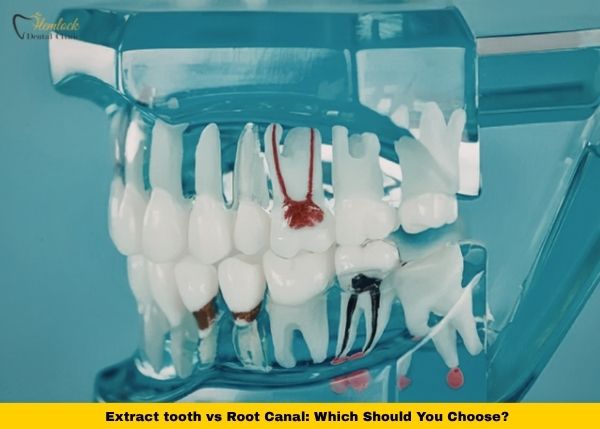
In most cases, a root canal is better than tooth extraction because it saves your natural tooth, preserves your bite, and prevents bone loss. However, if the tooth is severely damaged, fractured below the gum line, or cannot be restored, tooth extraction may be the only safe option. The right treatment depends on the remaining tooth structure and the extent of infection. If you’re considering root canal vs tooth extraction in Vancouver, understanding the benefits, risks, and long-term outcomes of each treatment can help you make the right decision.
What’s the Difference Between a Root Canal and a Tooth Extraction?
The core difference between tooth extraction vs root canal is simple: a root canal saves your tooth, while an extraction removes it.
When a tooth becomes infected, the goal in modern dentistry is always preservation. A root canal works by removing the infected tissue inside the tooth, cleaning the canals, and sealing them. The outer structure of the tooth stays in place, which helps maintain your natural chewing function and jaw health.
A tooth extraction takes a different approach. Instead of repairing the damage, the entire tooth is removed from the socket. While this immediately eliminates infection and pain, it also creates a gap that can lead to other issues over time if not treated properly.
What Is a Root Canal?
A Root canal treatment Vancouver is a restorative treatment designed to save a damaged or infected tooth. After cleaning the inside of the tooth, your dentist usually places a crown to protect it and bring it back to full function. In many cases, especially for patients who consider root canal vs tooth extraction in Vancouver, this option allows them to keep their natural smile without needing replacement solutions.
What Is a Tooth Extraction?
A tooth extraction involves removing the tooth completely. This can be straightforward or more complex, such as in the case of impacted wisdom teeth. If you’re exploring tooth extraction, it’s often recommended only when the tooth cannot be restored.
Root Canal vs Extraction: Side-by-Side Comparison
Both treatments can remove pain and infection, but they lead to very different long-term results. A root canal helps you keep your natural tooth, while an extraction removes it and may require replacement later.
| Factor | Root Canal | Tooth Extraction |
|---|---|---|
| Goal | Save the natural tooth | Remove the damaged tooth |
| Procedure time | 60–90 minutes | 20–60 minutes |
| Number of visits | 1–2 visits | Usually 1 visit |
| Pain level | Minimal with anesthesia | Minimal with anesthesia |
| Healing time | 2–5 days | 7–14 days |
| Upfront cost | Higher | Lower |
| Long-term cost | Lower | Higher (due to replacement) |
| Success rate | 85–95% | 100% (tooth removed) |
| Replacement needed? | No | Yes (implant, bridge, denture) |
| Bone loss risk | Very low | High if not replaced |
When Is a Root Canal the Better Option?
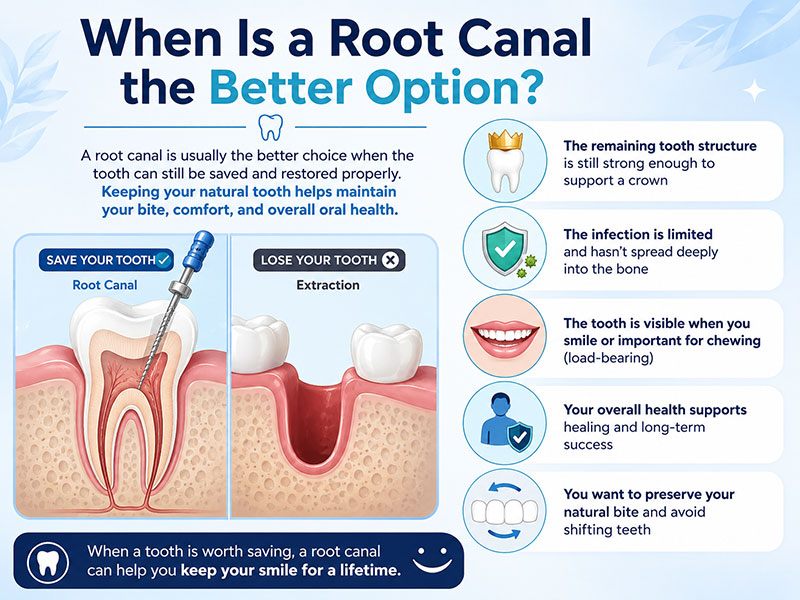
A root canal is usually the better choice when the tooth can still be saved and restored properly. Keeping your natural tooth helps maintain your bite, comfort, and overall oral health.
- The remaining tooth structure is still strong enough to support a crown
- The infection is limited and hasn’t spread deeply into the bone
- The tooth is visible when you smile or important for chewing (load-bearing)
- Your overall health supports healing and long-term success
- You want to preserve your natural bite and avoid shifting teeth
For a damaged back molar, root canal treatment may help preserve chewing function when enough healthy tooth structure remains to support a crown or another suitable restoration.
When Is Tooth Extraction the Right Choice?
Tooth extraction becomes the better option when saving the tooth is no longer predictable or safe. In these cases, removing the tooth can prevent further complications.
- The tooth is fractured below the gum line and cannot be restored
- There is severe bone loss around the tooth
- The tooth is extensively damaged or decayed
- Impacted wisdom teeth are causing pain or infection
- Long-term treatment costs are a concern or not manageable
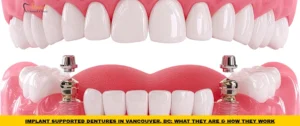
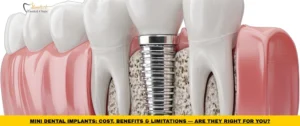
In these cases, your dentist may discuss replacement options such as implants, especially when comparing root canal vs implant solutions for long-term stability.
Which Procedure Is More Painful?
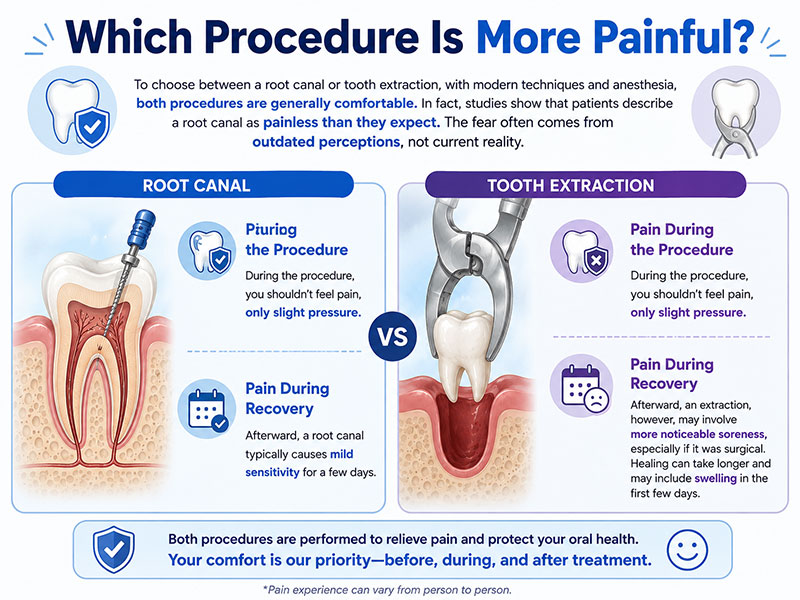
To choose between root canal or tooth extraction, with modern techniques and anesthesia, both procedures are generally comfortable. In fact, according to the American Association of Endodontists, patients who have had a root canal are six times more likely to describe it as painless than those who have not. The fear often comes from outdated perceptions, not current reality.
Pain During the Procedure
During the procedure, you shouldn’t feel pain, only slight pressure.
Pain During Recovery
Afterward, a root canal typically causes mild sensitivity for a few days. An extraction, however, may involve more noticeable soreness, especially if it was surgical. Healing can take longer and may include swelling in the first few days.
Cost Comparison: Which Is Cheaper?
A detailed root canal cost breakdown shows that, in the short term, a tooth extraction almost always looks cheaper than a root canal with a crown. Over about five years, however, saving the tooth with a root canal can become the more cost-effective and tooth-friendly option, especially if the treatment is successful and well maintained.
Below is a simple 5-year cost view for one tooth (by using broad, typical ranges, without insurance):
| Option | 5-year cost trend | Explanation |
|---|---|---|
| Root canal + crown | Roughly mid to high upfront cost, usually low extra cost over the next 5 years if the tooth heals well. | You pay more at the beginning, but if the root canal and crown are done properly, you mostly just need regular check-ups, not more big treatments on that tooth. |
| Extraction + implant | Highest total cost among the options, spread over several months (extraction, implant placement, then crown). | This is a big investment, but it replaces the full tooth (root and crown) and can last many years if you take care of it. |
| Extraction + bridge | Medium–to–high cost at the start, with a fair chance that it will need repair or replacement after 10–15 years. | Cheaper than an implant at first, but it involves trimming the teeth next to the gap, and those teeth may need extra work later. |
| Extraction (no replacement) | Very low initial cost, but a higher risk of hidden future costs from shifting teeth, bite problems, and extra work on neighboring teeth. | It feels like the cheapest choice now, but over time it can lead to bone loss, crooked teeth, and more dental treatment on other teeth. |
What Happens If You Don’t Replace an Extracted Tooth?
This is one of the most overlooked risks. Leaving a missing tooth untreated can lead to:
- Teeth shifting into the empty space
- Gradual bone loss in the jaw
- Bite misalignment and uneven pressure
- Changes in facial structure (sunken appearance)
- Difficulty speaking or chewing properly
This is why replacement options are often discussed immediately after extraction.
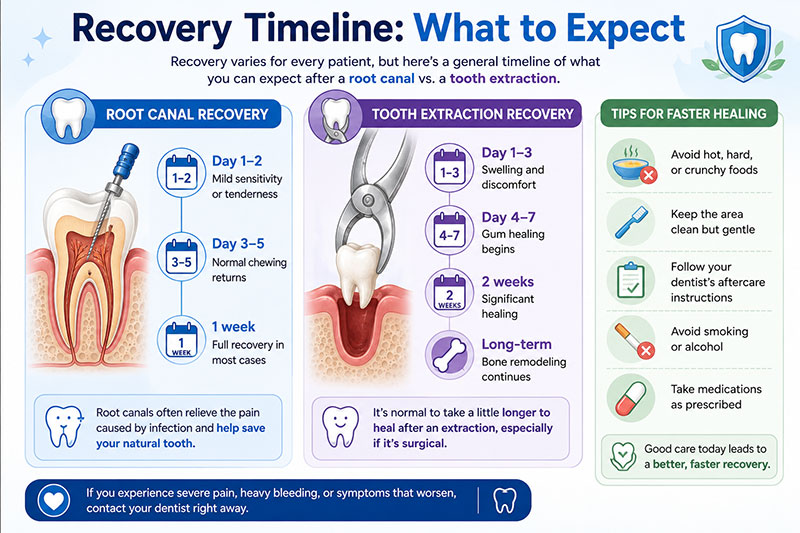
Recovery Timeline: What to Expect
Here are details about recovery timeline:
Root Canal Recovery
Day 1–2: Mild sensitivity or tenderness
Day 3–5: Normal chewing returns
1 week: Full recovery in most cases
Tooth Extraction Recovery
Day 1–3: Swelling and discomfort
Day 4–7: Gum healing begins
2 weeks: Significant healing
Long-term: Bone remodeling continues
Tips for Faster Healing
- Avoid hot, hard, or crunchy foods
- Keep the area clean but gentle
- Follow your dentist’s aftercare instructions
- Avoid smoking or alcohol
- Take medications as prescribed
How Do Dentists Decide Which Procedure You Need?
The decision is never random, it’s based on clinical evaluation and long-term prognosis. Dentists consider:
- How much of the tooth structure remains
- Severity and spread of infection
- Condition of surrounding bone
- Function and position of the tooth
- Your budget and long-term goals
If you’re visiting a Dental clinic in Vancouver, expect a full assessment before any recommendation.
Extract tooth vs root canal: Our Approach at Hemlock Clinic
Whenever possible, saving your natural tooth is the best option. A root canal allows you to keep your original structure, maintain your bite, and avoid future complications. Extraction is sometimes necessary, but it often leads to additional decisions and treatments down the line. If you’re unsure which treatment is right for you, a dentist can assess the tooth with X‑rays and provide personalized recommendations. Contact us at Hemlock Dental Clinic or fill out the form.
FAQs
Is it better to pull a tooth or get a root canal?
In most cases, a root canal is better because it preserves the natural tooth and prevents bone loss. Tooth extraction is usually recommended only when the tooth cannot be restored due to severe damage or infection.
Will pulling the tooth stop the pain immediately?
It removes the source of infection, but some discomfort during healing is completely normal.
Can a tooth that needs a root canal just be left alone?
No. The infection can spread and lead to more serious problems over time.
How long does a root canal tooth last?
With proper care, it can last many years, often a lifetime.
Is a root canal worth it if I’m older?
Yes. If the tooth can be saved, age is not a limiting factor.
What if I can’t afford a root canal?
Extraction may seem cheaper initially, but it often leads to higher long-term costs.
Does dental insurance cover both procedures?
Most plans cover part of both, but the details depend on your provider.
Can a tooth get infected again after a root canal?
It’s rare, but possible and usually treatable with good root canal retreatment.